Gum-Based Thickeners for Dysphagia: How They Work and How They Compare to Starch
Gum-based thickeners stay clear, resist saliva breakdown, and hold their consistency over time. Here's how they work, how they compare to starch, and which products are worth trying

In recent years, gum-based thickeners have been gaining traction as an alternative to traditional starch-based products. They stay clear in beverages, hold their consistency over time, and work well whether you're thickening hot coffee or cold juice. But what exactly are gum-based thickeners, and are they the right choice for your loved one? The answer depends on a few specific factors — here's what actually matters.
The first time I switched from a starch thickener to a gum-based one, the difference was immediately visible — the drink stayed clear, tasted almost normal, and was still the right consistency 20 minutes later when my mother finally finished it. That experience changed how I thought about thickener choice entirely.
What is a Gum-Based Thickener?
Gum-based thickeners are dysphagia management products that use naturally derived or modified plant gums (like xanthan gum or guar gum) to increase liquid viscosity without using starches.
Unlike traditional modified starch thickeners, gum-based products typically remain clear when mixed, reach their target consistency quickly, and maintain that thickness over time without continuing to thicken.
According to research published in Nutrients journal, gum-based thickeners demonstrate superior stability in the presence of salivary amylase compared to starch-based alternatives, or simply said: they stay thick and consistent even when mixed with saliva, while starch thickeners tend to break down and become thinner over time, increasing the risk of choking.
5 Types of Gum-Based Thickeners and Their Texture
Different gums create slightly different textures and have unique properties. Here's what you should know about the most common ones:
1. Xanthan Gum
Xanthan gum is the most widely used gum in commercial dysphagia thickeners. It's produced through bacterial fermentation and creates a smooth, slightly stringy texture. Xanthan gum solutions are highly pseudoplastic, meaning they thin under shear stress (like swallowing) but maintain thickness at rest.
2. Guar Gum
Derived from guar beans, guar gum produces a smooth, slippery texture that some users find easier to swallow. It's often combined with xanthan gum in commercial products because the blend provides better stability and mouthfeel than either gum alone.
3. Gellan Gum
Gellan gum creates a unique gel-like consistency when it interacts with calcium or other minerals in liquids. It's less common as a standalone ingredient but appears in some specialized formulations. The texture can feel slightly "elastic" compared to other gums.
4. Carob Bean Gum
This gum comes from carob tree seeds and creates a creamy, smooth texture. It's frequently used in combination with xanthan gum because the two work synergistically, meaning the mixture thickens more effectively than either gum would alone at the same concentration.
5. Cellulose Gum
Derived from plant cellulose, this gum produces a smooth, slightly slippery consistency. It's stable across various pH levels and temperatures, making it versatile for different beverages.
Starch-based vs. Gum-based Thickeners: What Are the Differences?
If you're trying to decide between whether to use starch-based or gum-based thickeners, these are the differences worth paying attention to:
1. Stability Over Time
Gum-based thickeners reach their target consistency within 1-2 minutes and stay there. You can mix your drink, set it aside for 30 minutes, and it will be the same thickness when you return. Starch-based thickeners, on the other hand, continue thickening for 5-15 minutes after mixing, and some continue beyond that. This means you need to plan ahead and can't easily adjust consistency if you've added too much powder.
2. Temperature Versatility
Gum-based thickeners work consistently in both hot and cold beverages. You can thicken your morning coffee and evening ice water with predictable results. Some starch-based thickeners require hot liquids to fully activate or may thin out in very cold beverages, requiring different dosing depending on temperature.
3. Resistance to Saliva Breakdown
Saliva contains an enzyme called amylase that begins breaking down starches in your mouth. When you drink a starch-thickened beverage, this enzyme can actually thin the liquid as it mixes with saliva, potentially reducing safety. On the other hand, gum-based thickeners resist amylase breakdown, maintaining their consistency even after contact with saliva.
4. Appearance and Taste
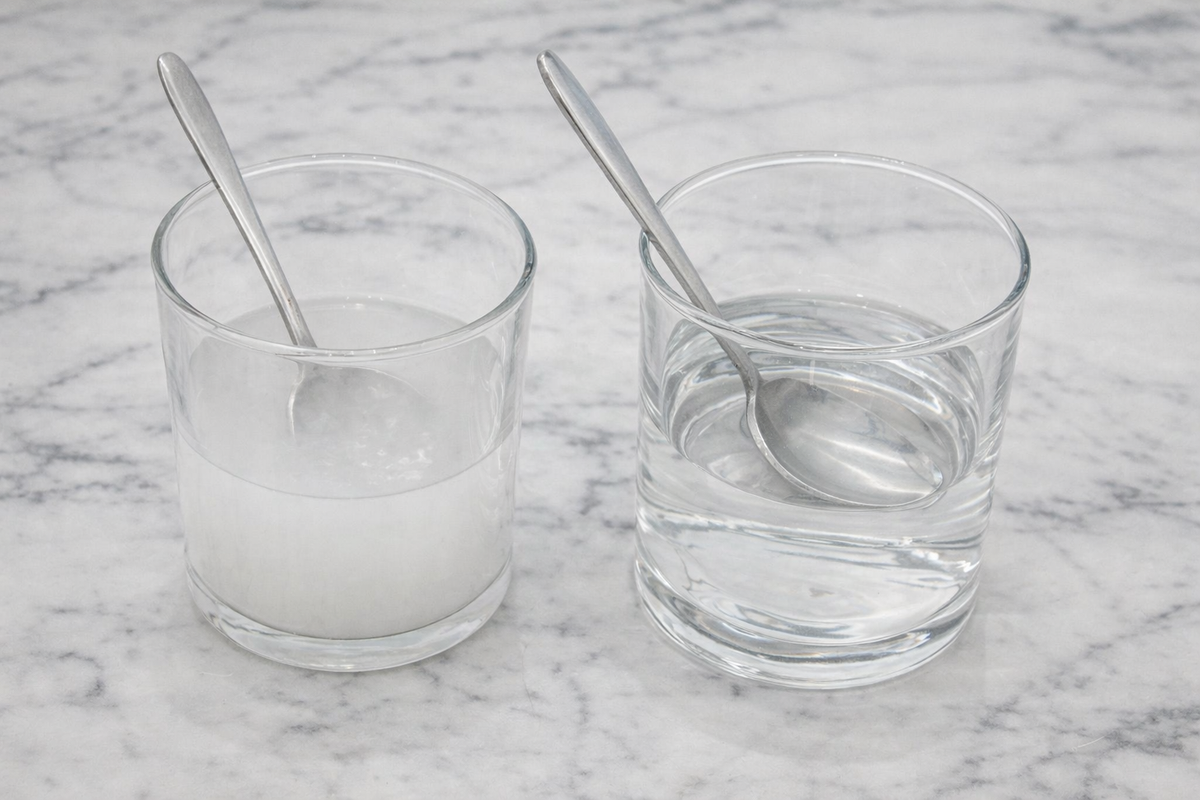
Gum-based thickeners typically remain clear or slightly translucent in beverages, while starch-based products often create a cloudy, opaque appearance. Many users also report that gum-based products have less impact on taste, though individual experiences vary. The smooth texture of gums also tends to feel less "starchy" or chalky in the mouth.
5. Caloric Content
Gum-based thickeners are generally very low in calories because gums aren't significantly digested or absorbed as calories. Meanwhile, starch-based thickeners contain actual carbohydrates that contribute calories and can affect blood sugar levels. For people managing diabetes or on calorie-restricted diets, this difference can be clinically significant.
So Which Thickeners Will Work Best For You?
The choice between starch-based and gum-based thickeners depends on your specific needs.
Gum-based thickeners are generally the better choice for beverages because they stay clear, tasteless, and maintain thickness consistency. They're also ideal if you're managing diabetes or watching your calorie intake, as they usually don’t contain significant carbohydrates.
Starch-based thickeners, on the other hand, can be advantageous when used with nutrient-dense foods or meal replacement formulas, as they allow for better incorporation of higher-energy substances into swallowing-safe preparations.
If you're considering gum-based thickeners, here's a quick rundown of some popular products based on customers' reviews:
- Gum-Based SimplyThick Easy Mix: One of the earliest and most popular gum-based products. This product is mainly known for its highly consistent texture and quality. The individual gel packets are particularly useful for travel or eating out — each packet thickens one drink to a pre-measured consistency, which removes the guesswork of dosing powder in a restaurant or hospital setting.
- Nutilis Clear from Nutricia: Often praised for staying truly clear with minimal taste impact, especially in acidic drinks. Worth noting that Nutilis Clear performs exceptionally well in acidic drinks like orange juice or tomato juice, where starch thickeners can break down fastest — if acidic drinks are part of the daily routine, this is the one to try first.
- Thick-It Clear Advantage: Good consistency and widely available in pharmacies from a trusted brand. The most widely available of the gum-based options — often stocked in pharmacies and some supermarkets, which matters when you run out unexpectedly and can't wait for an online order.
- DysphagiAide Clear: The most affordable option on this list, which makes it worth trying first if cost is a consideration. The consistency is comparable to the premium brands in most beverages. Sadly, it’s mostly available through online ordering rather than retail pharmacies.
(We’ve already written a more detailed review about this! Can check this article: 7 Daily Drinks Safe Enough to Mix with Thickeners for Dysphagia)
Overall, gum-based thickeners represent a meaningful advance in dysphagia management, addressing several limitations of traditional starch-based products. Despite their higher cost compared to starch-based thickeners, the benefits of stability, clarity, and amylase resistance make them worth considering.
As always, remember to consult your healthcare provider before making any changes to your dysphagia management plan, including switching thickeners! They can help determine the appropriate consistency level for your needs and ensure you're using these products safely and effectively.
One practical note before switching thickeners: if your loved one's IDDSI level was assessed while using a starch-based product, it's worth checking with your SLP before changing to a gum-based one. The two product types can feel different in the mouth, even at the same measured viscosity — what feels like Level 3 in a starch product may feel slightly different in a gum-based one, and some people need a brief adjustment period. A quick check with your SLP avoids any uncertainty.
If you're still working out which thickener to use for which drink, our guide on 7 daily drinks safe to mix with thickeners covers the practical combinations in detail.
Frequently Asked Questions
Is xanthan gum safe for dysphagia?
Yes — xanthan gum is the most widely used ingredient in commercial dysphagia thickeners and has a well-established safety profile. It is generally recognised as safe (GRAS) by the FDA. However, there is one important exception: xanthan gum-based thickeners are not recommended for premature infants or medically fragile neonates, as there have been reports of necrotising enterocolitis in this specific population. For adults, xanthan gum thickeners are considered safe for long-term use.
Can gum-based thickeners be used in hot drinks?
Yes — one of the primary advantages of gum-based thickeners over starch-based products is their stability across temperatures. They can be used in hot coffee, tea, or soup as well as cold drinks without significant change to consistency. Always recheck the consistency after mixing as very high temperatures can occasionally affect the final viscosity slightly.
Why does my thickened drink get thicker over time?
If a drink continues thickening after mixing, it almost certainly contains a starch-based thickener. Starch thickeners continue to hydrate for up to 15 minutes after mixing, which is why the consistency keeps changing. Gum-based thickeners reach their final consistency within 1–2 minutes and stay there. Switching to a gum-based product resolves this issue.
Are gum-based thickeners more expensive than starch-based?
Generally yes — gum-based thickeners typically cost more per serving than starch-based alternatives. However, because gum-based thickeners require less powder per serving to reach the same viscosity, the cost difference is often smaller in practice than the per-container price suggests. Budget-friendly gum-based options like DysphagiAide Clear are available for those where cost is a significant consideration.
Can I use gum-based thickeners with tube feeding formulas?
This should always be discussed with a dietitian or healthcare provider before attempting. Some thickeners interact with the protein content of tube feeding formulas in ways that alter the consistency unpredictably. Certain products are specifically formulated for use with nutritional supplements — your SLP or dietitian can advise on which products are appropriate for this specific use.
Reference
Cichero, J. A. Y. (2013). Thickening agents used for dysphagia management: Effect on bioavailability of water, medication and feelings of satiety. Nutrition Journal, 12(54). https://doi.org/10.1186/1475-2891-12-54