Dysphagia and Medication: How to Give Tablets and Capsules Safely

The first time I realised medication administration was a clinical problem in its own right — not just a practical inconvenience — was when I was caring for an elderly man with Parkinson's disease and dysphagia who had been crushing his levodopa tablets into his thickened water for months. Nobody had told him not to. Nobody had told his family. His GP had not mentioned it when the dysphagia diagnosis was made. His SLP had not addressed it.
What nobody in that care chain had communicated was that crushing levodopa tablets and mixing them with a thickener can significantly delay the medication's absorption — which matters enormously for a Parkinson's patient whose motor function depends on consistent, predictable blood levels of levodopa. The inconsistency in his symptoms that the family had attributed to disease progression may have been partly caused by inconsistent medication delivery.
That experience changed how I approach medication in every care setting I work in. Medication and dysphagia is one of the most consistently mismanaged intersections in elderly care — not because caregivers don't care, but because nobody tells them what they need to know.
This article covers everything a caregiver managing dysphagia needs to understand about medication safety.
Why Medication Administration Changes With Dysphagia
Pill dysphagia — difficulty swallowing tablets or capsules — affects up to 40% of the general population and up to 80% of people in nursing homes and skilled nursing facilities. It is one of the most common and least addressed clinical problems in dysphagia care.
The instinct when someone can't swallow a tablet is to crush it. It seems logical, practical, and immediate. In many cases, it is perfectly appropriate. In many other cases, it is clinically dangerous — and the difference between those two situations is something most caregivers have never been told about.
Inappropriate medication crushing can reduce the medication dose a patient receives, alter medication pharmacokinetics and pharmacodynamics, and compromise treatment efficacy and patient safety. Clinical judgment is needed to identify medications that can and cannot be crushed, select a crushing methodology and vehicle, and create a strategy for administering multiple medications.
The Most Important Rule — Before Anything Else
Never crush a medication without first checking with a pharmacist that it is safe to crush.
This is the single most important sentence in this article. Before implementing any strategy covered below — before crushing, before mixing, before dissolving — check with the pharmacist. Every time a new medication is prescribed, this check needs to happen again.
The pharmacist is the correct clinical contact for medication administration questions — not the GP (who may not know which formulations can be modified), not the SLP (who can advise on the swallowing side but not the pharmaceutical side), and certainly not a general internet search.
When you call the pharmacy, the question to ask is: "This person has dysphagia and cannot swallow tablets. Can this medication be crushed, dissolved, or is there a liquid formulation available?"
Medications That Cannot Be Crushed — And Why
There are 6 categories of medication that should never be crushed, altered, or modified without specific pharmacist guidance. Understanding why each category cannot be crushed helps caregivers recognise the risk rather than memorising a list.
1. Extended-Release, Modified-Release, and Slow-Release Formulations
These are the most important and most dangerous categories. Extended-release tablets are designed to release medicine over an extended period to allow less frequent administration. Crushing them can mean a fatal dose is released all at once.
These formulations are identified by letters after the drug name — ER, XR, XL, LA, SR, CR, MR, PR all indicate a modified-release formulation. If a tablet has any of these letters in its name, it cannot be crushed without specific guidance.
Common examples caregivers encounter:
- OxyContin (oxycodone ER) — long-acting pain reliever; crushing delivers the entire dose at once, causing overdose risk
- MS Contin (morphine ER) — same mechanism, same risk
- Effexor XR (venlafaxine XR) — extended-release antidepressant
- Nifedipine XL — there is a documented fatality from crushing extended-release nifedipine
- Metformin XR — extended-release diabetes medication
- Many blood pressure, heart, and pain medications — always check the full drug name for release designation letters
The risk is dose dumping — the full dose intended to be released over 12 or 24 hours enters the bloodstream all at once. For pain medications, this means overdose risk. For heart medications, this means cardiac events. For blood pressure medications, this means dangerous drops in blood pressure.
2. Enteric-Coated Tablets
Enteric coatings protect the stomach from irritation or ensure the medication is released in the intestines rather than the stomach. Crushing these tablets can lead to stomach upset or render the medication ineffective.
Enteric-coated tablets are identified by the letters EC or E/C after the drug name, or by descriptions like "gastro-resistant" on the packaging.
Common examples:
- Pantoprazole (Protonix) — a proton pump inhibitor for acid reflux; enteric-coated to survive stomach acid. Note: Pantoprazole oral granules are available specifically for people who cannot swallow tablets — ask the pharmacist about this formulation
- Omeprazole — the capsule can usually be opened, and the enteric-coated granules inside sprinkled onto a tablespoon of soft food or water, but the granules themselves must never be crushed. Always confirm with the pharmacist
- Aspirin EC — enteric coating protects the stomach lining from aspirin's irritant effects
- Some antifungal medications — coated to survive stomach acid
3. Sublingual and Buccal Medications
These are designed to dissolve in the mucosa of the mouth — under the tongue (sublingual) or between the cheek and gum (buccal). Sublingual and buccal medications are formulated to dissolve quickly in the oral mucosa fluid for rapid absorption. Crushing or chewing may cause a loss of dosage.
The medication is absorbed through the mouth lining — bypassing the swallowing process entirely. Crushing these and swallowing them defeats the entire delivery mechanism and dramatically reduces efficacy.
Common examples:
- Nitroglycerin tablets — for angina; sublingual absorption is how they work
- Some hormone replacement medications
- Buprenorphine — opioid treatment medication
4. Soft Gelatin Capsules With Liquid Filling
Soft gelatin capsules with liquid filling should not be chewed or split. Removal of the liquid inside may lead to incorrect dosage.
These are the gel capsules that contain liquid inside — common in supplements and some medications. Splitting or cutting them releases an uncontrolled amount of the active ingredient.
5. Hazardous Medications
Some medications are hazardous to handle — carcinogenic, teratogenic, or cytotoxic. Finasteride, for example, should not be handled by females who are pregnant due to potential absorption and risk to a male fetus. Crushing these medications creates powder that can be inhaled or absorbed through the skin.
Chemotherapy medications and some hormone treatments fall into this category. A pharmacist will flag these. If you are asked to administer any medication you are uncertain about — always check.
6. Medications With Specific Coating for Taste or Stability
Sugar-coated or film-coated tablets that are coated purely for taste or appearance can often be crushed — but the result is frequently extremely bitter, and the person may refuse to take it. Check with the pharmacist whether crushing is appropriate and whether a liquid alternative exists before exposing the person to an unpleasant taste.
How to Identify a Modified-Release Tablet at a Glance
Look at the full drug name on the box and the blister pack — not just the short name. The release designation will always appear:
| If the name contains | What it means |
|---|---|
| ER, XR, XL, LA | Extended/Long release — do NOT crush |
| SR, CR, MR, PR | Sustained/Controlled/Modified/Prolonged release — do NOT crush |
| EC, E/C, gastro-resistant | Enteric coated — do NOT crush |
| SL or sublingual on the label | Sublingual — do NOT crush |
| None of the above | Likely crushable — still confirm with pharmacist |
If in any doubt, call the pharmacist before touching the tablet.
Medications That Can Usually Be Crushed — How to Do It Safely
Plain, uncoated tablets without any of the identifiers above can generally be crushed — but the method and vehicle matter.
Crushing method: A purpose-designed pill crusher produces a finer powder with less waste than improvised methods. A clean mortar and pestle work well. A spoon pressed against a hard surface works as a last resort but produces inconsistent results.
The vehicle — what to mix it into: Crushed medication can be mixed with a soft food or liquid for administration. The choice matters:
Smooth yogurt — the most widely used vehicle for crushed medications in care settings. Thick, cohesive, and effective at masking bitter taste. Full-fat plain yogurt is preferable to flavoured varieties with potential interactions. Check the IDDSI level of the yogurt — it should match the prescribed level.
Smooth apple sauce or puréed fruit — works well for most medications. Avoid citrus-based purées for medications that interact with grapefruit or acidic foods.
"Avoid grapefruit or grapefruit juice specifically for medications with a known grapefruit interaction — the interaction is with grapefruit's specific compounds, not with citrus generally. Regular orange or lemon is not the same risk. Check the medication's patient information leaflet for grapefruit warnings."
Smooth custard — effective vehicle, particularly for sweet medications.
What to avoid: Without national industry standards, it is best to avoid mixing liquid medications with thickening agents due to potential effects on absorption. More on this below.
One medication at a time: Never mix multiple crushed medications in the same vehicle. Different medications interact differently with foods and with each other. Each medication should be administered separately in its own small amount of vehicle.
Full vehicle consumption: The person must consume the entire spoonful of vehicle. If they only take half the spoonful, they have received half the dose. Use the smallest practical amount of vehicle — just enough to administer the medication.
The Thickener-Medication Interaction — The Risk Almost Nobody Talks About
This is the most clinically significant and least known issue in medication management for dysphagia patients.
Thickeners, primarily composed of xanthan gum, guar gum, and pectin, may reduce the effectiveness of warfarin due to drug-food interactions.
The dissolution of four drugs, including warfarin and carbamazepine, was significantly delayed when dissolved in water and mixed with a commercial thickening agent. Thickened fluids have the potential to retard drug dissolution.
These initial studies suggest that thickener may affect the therapeutic efficacy of at least some medications. This may be of particular significance for medications such as warfarin, digoxin, and some anti-epileptic medications and antibiotics with narrow therapeutic drug levels.
In plain terms: mixing certain medications with a thickener — or taking them with a thickened drink — can slow down how quickly and completely the medication is absorbed. For medications where consistent blood levels are critical — warfarin (blood thinner), digoxin (heart medication), levodopa (Parkinson's), anti-epileptics, certain antibiotics — this is clinically significant.
What this means in practice:
For most medications, taking them with a thickened drink is fine — the interaction is small, and the clinical impact is negligible. But for the medications in the high-risk categories above, the pharmacist and prescriber need to know that thickened liquids are being used, so that dosing and monitoring can be adjusted accordingly.
The specific concern with warfarin: Warfarin (Coumadin) requires careful monitoring of blood clotting levels (INR). If the thickener is reducing warfarin absorption — even slightly — the INR will be affected. Someone on warfarin whose INR is unexpectedly variable should have their thickener use specifically reviewed with the prescribing doctor and pharmacist.
"If your loved one is already taking warfarin with thickened food or drink and their INR has been stable, do not stop the thickener abruptly — this could itself cause an INR change. Instead, inform the prescribing doctor and pharmacist that thickener is being used, so they can monitor INR more closely and adjust the warfarin dose if needed."
The specific concern with levodopa (Parkinson's): As described in my opening, levodopa's clinical effect depends on predictable absorption timing. Delayed or reduced absorption directly affects motor function. Thickener may affect the therapeutic efficacy of levodopa among other medications. Parkinson's patients and their caregivers should discuss medication timing and administration specifically with their neurologist and pharmacist.
Liquid Alternatives — The Safest Solution
Before resorting to crushing, always check whether a liquid formulation of the medication exists. Liquid medications specifically formulated for oral use are the safest alternative to tablet crushing for dysphagia patients — they are designed for consistent, reliable absorption and require no modification.
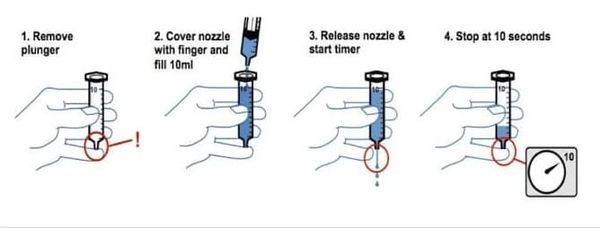
A total of 121 different oral liquid medications were assessed for flow through a syringe and consistency on a fork according to the IDDSI framework. They were classified as Level 0 (39%), Level 1 (16%), or Level 2 (45%).
This is the critical finding: most liquid medications are thin liquids (Level 0, 1, or 2). For someone prescribed Level 3 or Level 4 thickened liquids, a thin liquid medication is not safe to swallow as-is. Options:
Add a medication lubricant/swallowing gel — see the section below.
Take with a small sip of water — if the person's SLP has specifically approved plain water for medication administration, this may be possible even on a thickened liquid prescription. Do not assume the Frazier Free Water Protocol automatically covers medication administration — ask the SLP directly
Discuss with the pharmacist — some liquid medications can be incorporated into a medication lubricant gel (see below) while maintaining the IDDSI level.
Common medications with available liquid formulations (always confirm availability with your pharmacist — this changes):
- Many antibiotics
- Many antidepressants
- Some blood pressure medications
- Paracetamol/acetaminophen
- Many antiepileptic medications
- Many PPIs (omeprazole oral suspension)
When requesting a liquid alternative, tell the pharmacist: "This person has dysphagia and cannot swallow tablets. Is there a liquid formulation of this medication, and if so, what is its viscosity — is it thin or could it be thickened to Level [X]?"
Medication Lubricants — The Evidence-Based Solution
Medication swallowing gels and lubricants are purpose-designed thick vehicles that coat a tablet or capsule and help it slide through the throat without the person needing to generate the swallowing force to move a dry tablet.
Gloup is a purpose-designed swallowing gel made from sea algae, available in various flavours and IDDSI thickness levels. It is bioequivalent to water and remains cohesive until reaching the stomach, where it breaks down quickly due to pH and temperature. It encapsulates medication to facilitate swallowing without impacting absorption. Studies show it can eliminate the need for pill crushing in up to 40% of cases. Gloup leaves no residue in the mouth and has no known drug interactions, unlike food-based alternatives.
Gloup Forte was the only medication lubricant classified as IDDSI Level 4 (puréed/extremely thick) at room temperature. Four other Gloup products were classified as IDDSI Level 3 (moderately thick) at room temperature.
This is clinically important: Gloup is the only commercially available swallowing gel with published IDDSI level classification. For a dysphagia patient, using an IDDSI-classified lubricant means the medication delivery vehicle itself is not creating a mixed texture or thin liquid risk.
How to use a swallowing gel:
- Dispense a small amount of gel (typically one pump) onto a teaspoon
- Place the whole, unmodified tablet or capsule into the gel on the spoon
- Coat the tablet by adding a second pump of gel on top
- The person swallows the gel-coated tablet with minimal effort
The gel lubricates the tablet and reduces the friction that makes dry tablet swallowing difficult. For someone whose dysphagia is mild to moderate and who retains some ability to swallow tablets, this approach is preferable to crushing because it preserves the tablet's original formulation.
Important limitation: Swallowing gels help the tablet pass through the throat more easily — they do not address the underlying swallowing difficulty. They are not appropriate for someone with significant dysphagia who cannot safely manage any solids. Discuss with the SLP whether swallowing gels are appropriate for the individual's swallowing profile.
Medications and PEG Tubes
For someone who has had a percutaneous endoscopic gastrostomy (PEG) tube fitted — usually because oral intake has become unsafe — medication administration changes significantly.
The key principles for PEG tube medication:
Liquid formulations first — liquid medications are always preferred for PEG tube administration as they are less likely to cause tube blockage.
Flush before and after each medication — flush the tube with 15–30ml of water before and after each medication, and between medications. This prevents blockage and reduces drug-drug interactions.
Administer one medication at a time — never mix multiple medications in the tube simultaneously.
Crushing for PEG tubes — some tablets can be crushed and dissolved in water for tube administration, but the same "do not crush" rules apply. Additionally, some medications that can be crushed for oral use have specific guidance for tube use that differs.
Tube blockage — if the tube becomes blocked, do not attempt to unblock it with medication. Use warm water and gentle pressure. Contact the clinical team if warm water does not clear the blockage.
This is an area where a pharmacist who specialises in enteral feeding is invaluable — many hospital pharmacies have a clinical pharmacist with specific expertise in tube feeding medication management. Request this consultation if your loved one has a PEG tube.
The Pharmacist Conversation — A Script
Most caregivers feel uncertain about calling the pharmacist about a specific medication question. Here is an approach that works:
"I'm calling about a prescription for [name], who has been diagnosed with dysphagia and cannot safely swallow tablets. I need to know: can [medication name] be crushed? Is there a liquid formulation available? And is there anything I should know about giving this medication with thickened food or drinks?"
Three specific questions, in that order. Most pharmacists can answer all three in under two minutes. If the pharmacist is unsure, they can contact the manufacturer's medical information line for guidance.
Keep a record of the answer — write down the date, the pharmacist's name, and what they said. If the medication changes or a new medication is added, repeat the conversation.
The Conversation With the GP
When a dysphagia diagnosis is made, the prescribing GP needs to know. This is not automatic — SLPs do not automatically communicate dysphagia diagnoses to GPs in a way that triggers a medication review. You may need to initiate this.
What to say: "My mother has been diagnosed with dysphagia and cannot safely swallow tablets. Could you arrange a medication review to check whether any of her current medications need to be changed to a liquid formulation or an alternative form, and whether there are any medications that should not be crushed?"
A medication review by the GP alongside a consultation with the pharmacist covers both the prescribing side (which medications are essential, whether alternatives exist) and the formulation side (what can be safely modified and how).
Quick Reference: Before Giving Any Medication to a Dysphagia Patient
| Question | If Yes | If No |
|---|---|---|
| Does the tablet/capsule name contain ER, XR, XL, LA, SR, CR, MR, PR? | Do NOT crush — contact pharmacist | Proceed to next check |
| Does it say EC, enteric-coated, or gastro-resistant? | Do NOT crush — contact pharmacist | Proceed to next check |
| Is it sublingual, buccal, or under-the-tongue? | Do NOT crush — give as directed | Proceed to next check |
| Is it a soft gel capsule with liquid inside? | Do NOT split or crush | Proceed to next check |
| Has pharmacist confirmed it can be crushed? | Proceed with crushing | Do not crush until confirmed |
| Is the person on warfarin, digoxin, levodopa, or anti-epileptics? | Inform prescriber and pharmacist about thickened liquid use | Proceed with normal approach |
| Is there a liquid alternative available? | Use liquid formulation instead of crushing | Discuss with pharmacist |
Frequently Asked Questions
Can I crush any tablet that doesn't say extended-release?
Not automatically. Some medications should not be crushed — anything that is time-released — and you might not know this just from looking at the tablet. Always check with a pharmacist before crushing any medication for the first time.
Can I mix medications in yogurt to save time?
No — each medication should be given separately. Different medications interact differently with foods and with each other. Mixing them in a single vehicle means you cannot verify that the full dose of each was consumed, and interactions between the medications in the vehicle are unpredictable.
Does taking medication with a thickened drink affect how it works?
For most medications, the effect is negligible. Thickener may be of particular significance for medications such as warfarin, digoxin, some anti-epileptic medications, and antibiotics with narrow therapeutic drug levels. If the person takes any of these medications, inform the prescriber and pharmacist that thickened liquids are being used.
What is the best food to hide the taste of a crushed tablet?
Smooth yogurt is the most widely used vehicle in clinical settings — it is thick enough to mask bitter taste, is already at approximately Level 4 IDDSI consistency, and has no known interactions with most common medications. Avoid grapefruit-based products, which interact with many medications. Always check with the pharmacist whether the specific medication has known food interactions.
What is the best food to hide the taste of a crushed tablet?
Can I open capsules?
Some capsules can be opened and their contents sprinkled onto soft food — but not all. Some capsule contents can be sprinkled onto a tablespoon of applesauce or yogurt and consumed without chewing. Extended-release capsules that can be opened will often specify this explicitly on the packaging. If the packaging says the capsule can be opened, follow those specific instructions. If it doesn't say, check with the pharmacist before opening.
What is a medication swallowing gel, and is it safe?
Gloup swallowing gel is made from sea algae, is bioequivalent to water, breaks down in the stomach, and has no known drug interactions. It is the most clinically validated option and the only one with published IDDSI level classification. It is appropriate for dysphagia patients who retain some ability to swallow but find dry tablets difficult — confirm with the SLP that the swallowing profile is appropriate for its use.
Should I tell the pharmacist about the dysphagia diagnosis?
Yes — every time, for every new medication. The pharmacist can only advise on alternative formulations if they know a swallowing difficulty exists. Many caregivers collect prescriptions without mentioning dysphagia. Mentioning it at the pharmacy counter should become part of the standard medication collection routine.
References
Blaszczyk, A., Brandt, N., Ashley, J., Tuders, N., Doles, H., & Stefanacci, R. G. (2023). Crushed tablet administration for patients with dysphagia and enteral feeding: Challenges and considerations. Drugs & Aging, 40(10), 895–907. https://doi.org/10.1007/s40266-023-01056-y
Atkin, J., Devaney, C., Yoshimatsu, Y., & Smithard, D. (2024). Modified medication use in dysphagia: The effect of thickener on drug bioavailability — a systematic review. European Geriatric Medicine, 15(1), 19–31. https://doi.org/10.1007/s41999-023-00896-6
Malouh, M. A., Cichero, J. A. Y., Manrique, Y. J., Crino, L., Lau, E. T. L., Nissen, L. M., & Steadman, K. J. (2020). Are medication swallowing lubricants suitable for use in dysphagia? Pharmaceutics, 12(10), 924. https://doi.org/10.3390/pharmaceutics12100924
Steadman, K. J., et al. (2022). Swallowing safety of oral liquid medications: Assessment using the IDDSI framework. Journal of Pharmacy Practice and Research. https://doi.org/10.1002/jppr.1818
National Foundation of Swallowing Disorders. (2025, June). Rethinking medication intake for those with pill dysphagia. https://swallowingdisorderfoundation.com/pill-dysphagia/
PharMerica. (2024). Oral medications that should not be crushed or altered — October 2024 update. https://pharmerica.com
Specialist Pharmacy Service, NHS. (2024). Swallowing difficulties: Medication guidance. https://www.sps.nhs.uk/home/guidance/swallowing-difficulties/
Cornish, P. (2005). Avoid the crush: Hazards of medication administration in patients with dysphagia or a feeding tube. CMAJ, 172(7), 871–872.
American Speech-Language-Hearing Association. (n.d.). Adult dysphagia (Practice Portal). https://www.asha.org/practice-portal/clinical-topics/adult-dysphagia/