Thickening Drinks for Dysphagia: Everyday Beverages and the Best Thickener for Each
From coffee to orange juice, most everyday drinks can be safely thickened for dysphagia. Here's which thickeners work best for each drink — and why the match matters.


A lot of people with dysphagia think they have to say goodbye to their favorite cappuccino, tea, milkshake, or any go-to drink. It is sad, but with the right type of thickener and preparation method, you can still enjoy them without the taste changing. In this article, we’ll share seven everyday drinks that maintain their great taste even after thickening (also the products that mix well with them too!)
Why Sometimes Food Thickeners Are Not the Same as Drink Thickeners
We’ve recommended a few food thickeners before. On this page, we’ll talk about thickeners again, but mostly different ones, because not every beverage reacts the same way when mixed with a thickener.
Some drinks keep their flavor beautifully when thickened, while others can turn chalky or separate into layers. Finding the right match between your favorite drink and the right thickener is important, as it reacts differently depending on the type of drink you choose.
Temperature matters, acidity matters, and even the specific ingredients in your drink can make a big difference.
Temperature: Heat accelerates starch hydration, which means a starch thickener added to hot coffee will reach its final thickness faster and may overshoot your target level — gum-based thickeners are more predictable in hot liquids.
Acidity: Acidic drinks like orange juice or tomato juice break down starch thickeners faster than neutral drinks — a drink thickened with starch may be at Level 3 when you make it and Level 2 by the time it's finished. Gum-based thickeners are significantly more stable in acidic conditions.
Dairy: The proteins in dairy-based drinks interact with thickener molecules in ways that can either increase or decrease final viscosity, depending on the product — always check consistency after mixing rather than relying on the standard dose.
Best Drinks to Combine with Thickeners for Dysphagia
Before thickening any drink, confirm the IDDSI level prescribed by your SLP — Level 1 (slightly thick), Level 2 (mildly thick), or Level 3 (moderately thick) for liquids. The thickener amounts in each product's instructions are calibrated to these levels. If you're unsure which level your loved one needs, this should be assessed by an SLP before experimenting at home — the right level is a clinical decision, not a preference.
Here are the most popular beverages that work really well with thickeners that will help you keep them tasting good.
Water
Water is the most important drink for anyone with dysphagia — dehydration is one of the most consistent and serious risks of poorly managed swallowing difficulties — and it's also the one most caregivers struggle with the most. Plain thickened water has a texture and appearance that many people find deeply unpleasant, and the refusal to drink it is one of the most common reasons dysphagia patients become dehydrated.
The thickener choice here makes a bigger difference than with any other drink. Starch-based thickeners turn water cloudy, give it a distinctly floury taste, and continue thickening over time — the result can look and taste more like wallpaper paste than water. Gum-based thickeners are significantly better for plain water: they stay clear, have minimal taste impact, and hold their consistency without continuing to thicken.
If your loved one still refuses plain thickened water — which is common and understandable — a very mild squash or diluted fruit cordial added to the water can make it considerably more palatable without meaningfully affecting the thickener's performance. Some caregivers find that chilled thickened water is better tolerated than room temperature, as the cold dulls the texture sensation slightly.
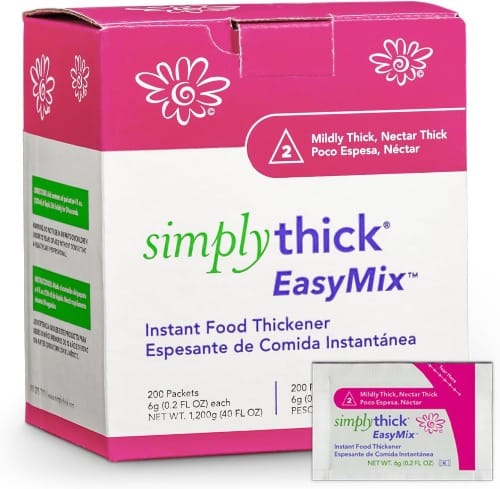
Product recommendation: Any of the clear gum-based thickeners covered in this article work well for water. SimplyThick Easy Mix and Nutilis Clear are the most widely used. Avoid starch-based thickeners for plain water wherever possible.
How to mix: Water has the lowest base viscosity of any drink — it needs the full manufacturer-recommended dose to reach the target IDDSI level. Don't reduce the dose as you might with dairy or juice. Check consistency after 60–90 seconds and again at serving temperature.
One important note: Some SLPs use a protocol called the Frazier Free Water Protocol, which allows some patients to drink plain thin water under specific conditions despite a dysphagia diagnosis. If hydration is a significant challenge, ask your SLP whether this protocol is appropriate — it's not suitable for everyone, but can meaningfully improve quality of life for those it is safe for.
Coffee
Your morning ritual doesn't have to end. Yes, coffee can be tricky. The heat affects how the thickening agents work, and some starch-based options leave a bitter aftertaste. But plenty of people are successfully enjoying their daily cup.
SimplyThick Easy Mix Nectar is designed to handle hot liquids without breaking down or adding that weird, cardboard-like flavor. They're heat-stable and blend smoothly, so your coffee still tastes like coffee.
How to mix: Start with the manufacturer's recommended dose for your target IDDSI level, then reduce by about 10–15% — coffee is naturally slightly more viscous than water at serving temperature, so you'll reach your target level with slightly less thickener than the packaging suggests."
Tea
Tea lovers can absolutely still enjoy their daily cup. The challenge is preserving the delicate flavour — particularly with lighter teas like jasmine, chamomile, or white tea, where a heavy or starchy thickener can completely overpower the drink.
SimplyThick Easy Mix Nectar is gentle enough for lighter teas while still being stable enough for heartier black or green teas. The aroma, colour, and calming ritual of tea time all stay intact, which matters as much as the safety aspect for many people.
How to mix: Hot tea thickens faster than cold drinks — add the thickener to freshly brewed tea, stir well, and allow 60 seconds before checking consistency. The drink will cool slightly during this time, which also affects final viscosity since liquids become marginally thicker as they cool. Check at serving temperature, not immediately after mixing. For lighter herbal teas, start with the minimum recommended dose — they have a lower base viscosity than water and need less thickener to reach the target level.
Milk in tea: If your loved one takes milk in their tea, add the milk before thickening rather than after — this gives a more uniform final texture and prevents the thickener from forming uneven clumps when milk is stirred in afterward.
Milkshakes
Milkshakes already have that creamy thickness going for them, which is perfect. You just want to adjust the consistency to your prescribed level without accidentally turning it into pudding.
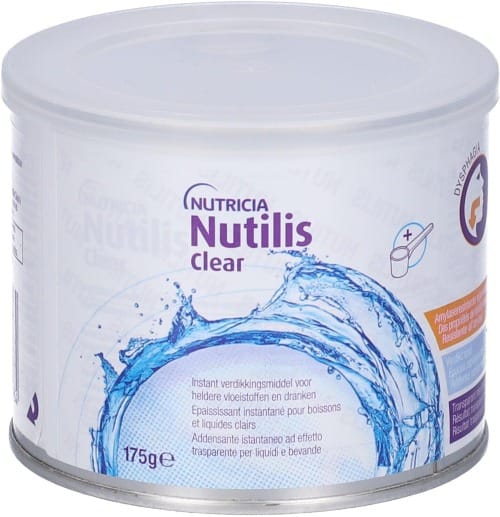
The challenge with dairy is that some thickeners can cause separation or grittiness. Nutricia Nutilis Powder Thickener works well here; it keeps that smooth, indulgent texture of the milkshakes without changing the taste.
How to mix: Dairy thickens the base liquid, so start with half the recommended dose, check consistency, then add more if needed. It's easy to overshoot with milkshakes.
Chocolate Drinks
Whether it's hot chocolate on a chilly evening or cold chocolate milk as a treat, there's no reason to skip this comfort drink. The challenge with chocolate is twofold — cocoa powder can mask a gritty thickener texture, making it easy to miss a consistency problem, and dairy-based versions have the same protein interaction quirks as milkshakes.
Nutricia Nutilis Powder Thickener dissolves smoothly in both hot and cold chocolate drinks, preserving the rich cocoa flavour without clumping. Because the cocoa flavour is strong enough to disguise minor texture issues, always do the spoon tilt test before serving — don't rely on taste alone to confirm the consistency is right.
How to mix: Chocolate milk has a slightly higher base viscosity than water. Start with the manufacturer's recommended dose for your target IDDSI level, then check consistency after 2 minutes before adding more — it's easy to overshoot with dairy-based drinks.
Orange Juice
Don't give up on your favourite orange juice just yet, because it’s absolutely consumable and tastes well too with the right thickener. You just need a thickener that can handle the acidity without forming lumps or breaking down.
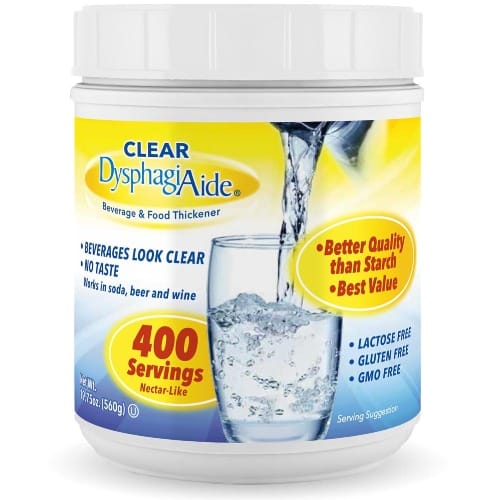
Clear thickeners work best here. Clear DysphagiAide Thickener Powder and SimplyThick Easy Mix Nectar keep your juice looking bright and tasting tangy, without any chalky residue. They also stay stable if you need to prepare your drink ahead of time.
How to mix: Acidic drinks like OJ can interact slightly with some thickeners — mix gum-based thickeners into juice and allow 60–90 seconds for full hydration before checking consistency. The initial pour may look thinner than the final result.
Smoothies
Smoothies are honestly one of the easiest options — they're already thick, packed with nutrients, and highly customisable. The main challenge is getting an even, consistent texture throughout, especially when fruit fibres, seeds, or leafy greens are in the mix.
Clear DysphagiAide Thickener Powder blends in directly during the mixing process, distributing evenly without masking the fresh fruit flavour or creating that artificial aftertaste some thickeners leave. The result is a consistent texture from top to bottom rather than a thicker layer settling at the base.
How to mix: Add the thickener powder to the blender with the other ingredients rather than stirring it in afterward — blending activates gum-based thickeners more evenly than manual mixing. Always strain out seeds and skin before thickening, and check consistency after 60–90 seconds once blending is complete.
One caution: Smoothies made with raw mango, papaya, or pineapple contain natural enzymes that can interfere with some thickeners and cause unexpected thinning. If using these fruits, check consistency again just before serving.
Yogurt Drinks
Yogurt-based drinks — lassi, kefir, drinkable yogurt — are naturally nutritious and already on the thicker side, which makes them ideal candidates for dysphagia modification. You're fine-tuning rather than starting from scratch.
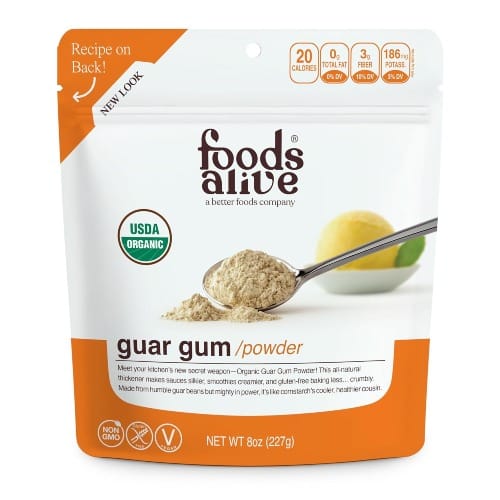
FoodsAlive Organic Guar Gum Powder and Nutricia Nutilis Powder Thickener both integrate smoothly with the tangy, creamy yogurt base, preventing the watery separation that can happen when yogurt drinks are left to sit. Guar gum in particular works well with dairy proteins and tends to produce a very smooth, cohesive result.
How to mix: The natural thickness of yogurt drinks varies significantly between brands and fat content — a full-fat kefir behaves very differently from a low-fat drinkable yogurt. Always start with half the recommended thickener dose, check after 2 minutes, and adjust. The dairy protein content also means the consistency may continue developing slightly for up to 5 minutes after mixing — check again before serving.
Wine and Beer
This entry will surprise some readers — but it's one of the most commonly asked questions from family caregivers, and it deserves an honest answer rather than silence.
For many people, a glass of wine at a family dinner or a beer while watching a match is bound up in identity, social connection, and normality in ways that go beyond the drink itself. The question of whether this can continue safely after a dysphagia diagnosis is a real and legitimate one.
The honest answer is: sometimes, with the right guidance, and never without SLP input first.
Alcohol affects thickener behaviour in ways that are less predictable than other drinks. Ethanol can interfere with both starch and gum-based thickener hydration, meaning the same dose that produces Level 3 in water may produce a different result in wine or beer. Carbonated beer presents an additional challenge — the bubbles affect how the thickener distributes through the liquid, and carbonation itself can be an aspiration risk for some patients regardless of thickening.
Alcohol also affects cognitive alertness and muscle coordination, both of which matter for safe swallowing. Even a small amount of alcohol can reduce the reliability of a swallow reflex that is already compromised.
Our honest recommendation: Do not attempt to thicken alcohol at home without explicit guidance from your SLP. If enjoying an occasional drink is important to your loved one's quality of life — and it may be — raise it directly with the SLP at the next assessment. Some patients on certain dysphagia profiles can safely enjoy a small amount of thickened wine or flat beer under controlled conditions. Others cannot. Only a clinical assessment can determine which situation applies.
If the SLP gives the go-ahead, gum-based thickeners are generally more stable in alcohol than starch-based, and still wine is significantly more manageable than sparkling. Test consistency carefully and never serve without confirming the final texture meets the prescribed IDDSI level.
Nutritional Supplement Drinks (Ensure, Fortisip, Boost)
Nutritional supplement drinks are a daily reality for a large proportion of dysphagia patients — particularly those who cannot meet their caloric and protein needs through modified food alone. Getting the thickening right for these drinks is clinically important in a way that goes beyond taste preference.
The challenge is that supplement drinks are not simple liquids. They contain a dense mix of proteins, fats, carbohydrates, vitamins, and minerals — and different brands formulate these differently. This means the same thickener at the same dose can produce noticeably different results in Ensure versus Fortisip versus Boost, and even between different flavours within the same brand.
Protein content in particular can interact with thickener molecules and either increase or decrease final viscosity in unpredictable ways. Some supplement drinks also contain ingredients that actively interfere with certain thickeners — a few formulations contain amylase, the same enzyme in saliva that breaks down starch thickeners, which means a starch-thickened supplement may thin out significantly before it is finished.
General guidance by thickener type:
Gum-based thickeners are more reliable for supplement drinks than starch-based, precisely because of the amylase issue above. SimplyThick Easy Mix is widely used in clinical settings specifically because it performs consistently across most supplement drink formulations.
Starch-based thickeners can work with some supplement drinks but require careful monitoring — always check consistency at 5 minutes and again at 15 minutes after mixing to confirm it has stabilised rather than continuing to thicken or thin.
How to mix: Never assume the standard water-based dose applies to supplement drinks. Start with the minimum recommended dose, allow 2–3 minutes for full hydration, check consistency, and adjust. Some supplement drinks require significantly less thickener than water to reach the same IDDSI level; others require more. Keep a note of the dose that works for each specific product and flavour — it may differ even within the same brand.
Important: If a patient's primary nutrition source is supplement drinks, any change to thickener type or dose should be discussed with the treating dietitian or SLP. Getting the consistency wrong in a supplement drink has direct nutritional consequences as well as safety implications — an over-thickened supplement that the person refuses to finish contributes to the malnutrition risk that the supplement was intended to prevent.
Quick reference table with all 10 drinks:
| Drink | Best Thickener Type | Watch Out For |
|---|---|---|
| Coffee | Gum-based | Heat accelerates starch over-thickening — gum-based is more predictable in hot liquids |
| Milkshake | Starch or gum | Dairy base increases viscosity — start with half dose and adjust |
| Orange Juice | Gum-based only | Acidity breaks down starch thickeners over time — gum-based only |
| Chocolate Drink | Starch or gum | Cocoa masks texture issues — always do spoon tilt test, don't rely on taste |
| Smoothie | Gum-based | Add during blending not after; tropical fruits (mango, papaya, pineapple) can thin some thickeners |
| Yogurt Drink | Guar gum or starch | Consistency varies by brand and fat content — start with half dose; check at 2 and 5 minutes |
| Tea | Gum-based | Lighter teas need minimum dose; add milk before thickening not after |
| Water | Gum-based only | Starch turns water cloudy and floury — gum-based only; mild squash improves palatability |
| Wine / Beer | Gum-based if approved by SLP | Alcohol affects thickener behaviour unpredictably; never attempt without SLP guidance first |
| Nutritional Supplements (Ensure, Fortisip, Boost) | Gum-based preferred | Protein content interacts with thickeners; some formulas contain amylase which breaks down starch — dose varies by brand and flavour |
Summary
One thing worth remembering: thickened drinks look and feel different from what your loved one is used to, and the adjustment period can be frustrating — particularly for someone who has been drinking their morning coffee the same way for 40 years. Patience with the process matters as much as getting the thickener right. Most people find a combination that works well within a week or two of experimenting, and the difference it makes to daily hydration and quality of life is worth the effort.
If you're still deciding between thickener types, our guide on gum-based vs starch thickeners explains the key differences in detail.
Reference
Cichero, J. A. Y. (2013). Thickening agents used for dysphagia management: Effect on bioavailability of water, medication and feelings of satiety. Nutrition Journal, 12(54). https://doi.org/10.1186/1475-2891-12-54
Zargar, A., et al. (2023). Comparison of gum-based and starch-based thickeners for dysphagia management. Nutrients, 15(14), 3279. https://www.mdpi.com/2072-6643/15/14/3279