Best Dysphagia Cups for Safe Drinking: A Guide by IDDSI Level
A practical guide to choosing the right dysphagia cup by IDDSI level — with specific recommendations for Levels 0–4, honest comparisons, and answers to the questions caregivers actually ask.

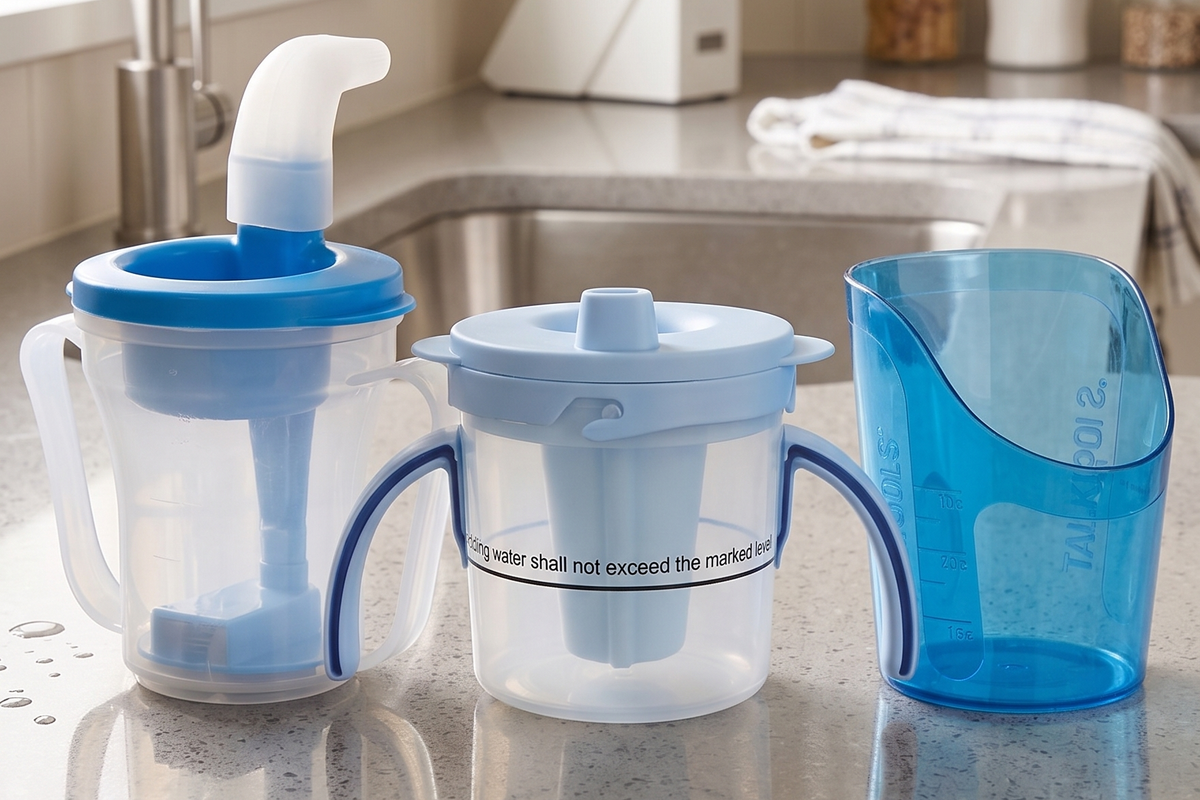
If you or someone you care about has difficulty swallowing, you're not alone. Dysphagia affects millions of people worldwide, making something as simple as drinking water a potential challenge. Here's what makes all the difference: finding the right dysphagia cup can truly help you maintain both safety and independence during meals.
These specially designed cups help control liquid flow, reduce spill risk, and enable safer swallowing positions. Turning what might feel like a daily struggle into a safe, confident drinking experience. In this article, we will walk you through the best dysphagia cups recommended based on your specific needs and IDDSI levels.
This guide organises dysphagia cups by IDDSI level, so you can find the right starting point for your loved one's prescribed liquid consistency — and understand why the match matters.
Before Choosing a Cup: What Your SLP Needs to Tell You
The most important thing to establish before buying any dysphagia cup is the IDDSI liquid level prescribed by a speech-language pathologist. The right cup for Level 0 (thin liquids) is completely different from the right cup for Level 3 (moderately thick). Using the wrong cup at the wrong level doesn't just affect comfort — it affects safety.
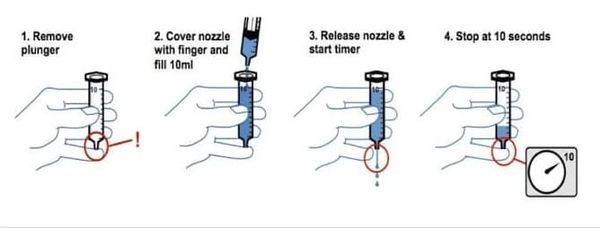
If you haven't had a formal swallowing assessment yet, that is the first step. Our complete IDDSI Level Guide explains each level in plain language, and our home flow test guide shows how to check liquid consistency at home between clinical appointments.
Understanding the IDDSI Liquid Levels
The IDDSI framework classifies drinks from Level 0 to Level 4. Here's what each level actually means in practice:
| Level | Name | What It Looks Like | The Syringe Test |
|---|---|---|---|
| 0 | Thin | Water, tea, coffee, juice — flows freely | 1ml or less remains in a 10ml syringe after 10 seconds |
| 1 | Slightly Thick | Flows more slowly than water, like a very thin milkshake | 1–4ml remains |
| 2 | Mildly Thick | Pours off a spoon in a steady, unbroken stream; requires slightly more effort to swallow | 4–8ml remains |
| 3 | Moderately Thick | Falls off a spoon in dollops; cannot be drunk through a standard straw | 8–10ml remains |
| 4 | Extremely Thick | Holds its shape on a spoon; does not flow when tilted; usually taken by spoon | Does not flow through syringe |
Note: IDDSI deliberately moved away from food descriptors like "nectar" and "honey" because these vary across cultures and products. The level numbers and physical descriptions above are the correct IDDSI framework terminology.
What to Look For in Any Dysphagia Cup
Regardless of IDDSI level, these features matter across all cup choices:
BPA-free, food-safe materials — look for cups that specify food-grade or medical-grade plastic. Avoid cups with no material specification. (ASHA)
Dishwasher safe — dysphagia cups are used multiple times per day. A cup that requires hand-washing only adds significantly to the caregiver's workload. Check the manufacturer's maximum temperature — most are safe to 60°C but not higher.
Lightweight when empty — a cup that is heavy when empty becomes very heavy when filled with a thick drink. Factor in the person's hand strength and arm endurance.
Non-slip base — pairs with plate guards and non-slip mats to stabilise the full mealtime setup. A cup that slides when pushed against contributes to spilling, even with good flow control.
Adult appearance — dignity matters. A cup that looks medical or infantilising is more likely to be refused. The SavvyBloom in particular is designed to look more like a travel mug than a medical device — that detail genuinely affects acceptance.
A PubMed study recommends that people with dysphagia look for devices adaptable to their condition. Some people benefit from double handles for stability, weighted handles for tremor control, or attachment straps for security.
Quick Comparison: All Cups at a Glance
| Cup | Product | Type | IDDSI Level | Flow Regulated? | Best For | Price |
|---|---|---|---|---|---|---|
| Nosey Cup | TalkTools CutOut | Contain | 0–2 | No | Chin-tuck drinking position, thin to mildly thick liquids, independent use | $15–$25 |
| Adult Sippy Cup | Peaoop | Contain | 1–2 | No | Mild dysphagia, independent drinking, limited hand strength or grip | $12–$20 |
| Flow Control Cup (valve) | BaseSmall | Regulate — valve | 0–3 | Yes — valve controls rate | All levels 0–3, adjustable valve, simpler daily operation | $25–$40 |
| Flow Control Cup (regulator inserts) | SavvyBloom | Regulate — insert | 0–3 | Yes — fixed volume per sip (5cc / 10cc / 15cc) | Moderate dysphagia, precise sip volume control, most clinically accurate flow control | $25–$40 |
| Convalescent Cup | Jingmore | Contain | 0–3 | No — caregiver controls tilt | Caregiver-assisted drinking, bed-bound, post-surgical recovery | $20–$35 |
| Level 4 | Spoon only | — | 4 | Not applicable | Level 4 does not flow — cannot be drunk from any cup; use a spoon | — |
A note on "Flow Regulated": cups marked No rely on the person's own tilting and suction to control how much liquid reaches the mouth. Cups marked with Yes, use a physical mechanism to limit flow regardless of tilt angle. For moderate to severe dysphagia, a flow-regulated cup is significantly safer.
Dysphagia Cups by IDDSI Level
IDDSI Level 0 — Thin Liquids
Thin liquids are the most challenging for people with dysphagia — they flow fast and give the swallow reflex very little time to respond. The priority at this level is positional control and flow management.
What to look for:
- Cutout rim design to allow chin-tuck drinking position without tilting the head back
- Narrow spout or small aperture to slow delivery
- A lid that prevents the person from tilting the cup too far
Best cup type: Nosey Cup (Cutout Cup)
The nosey cup's cutout rim accommodates the nose so the person can drink without extending the neck — maintaining the safer chin-tuck position that SLPs often recommend for thin liquid management. Without this design, drinking from a standard cup requires the person to tilt their head back, which opens the airway at exactly the wrong moment.
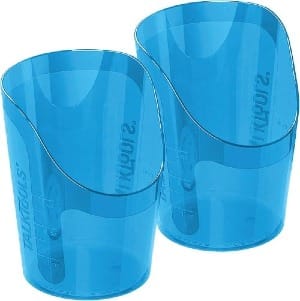
Recommended: TalkTools CutOut Nosey Cup
- Price: $15–$25
- Best for: People prescribed thin liquids who have been advised to maintain a chin-tuck position
- Watch out for: The cutout design feels unfamiliar at first — allow a few days of adjustment before assessing whether it's working
IDDSI Level 1 — Slightly Thick
At Level 1, the liquid moves more slowly than water but still flows freely. The main challenge is controlling the pace — the liquid is manageable, but the person still needs some support to avoid taking too much per sip.
What to look for:
- Spouted lid with a small opening
- Easy-grip handles for stability
- Lightweight design — slightly thick liquids still require some tipping
Best cup type: Adult Sippy Cup with Controlled Spout
A spouted cup at this level gives the person a small, consistent amount of liquid per sip without the complexity of a flow regulator. It allows independent drinking while providing enough control to prevent overwhelming the swallow reflex.
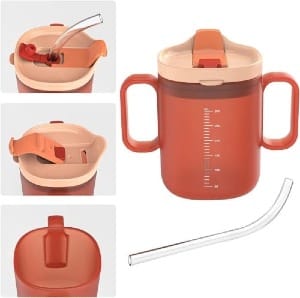
Recommended: Peaoop Adult Sippy Cup
- Price: $12–$20
- Best for: People with mild dysphagia who can self-manage drinking with some flow control; also good for people with limited hand strength who need the two-handle grip
- Watch out for: The spout can clog if not cleaned thoroughly after each use — use a thin brush to clean the spout channel
IDDSI Level 2 — Mildly Thick
At Level 2, the liquid is noticeably thicker than water and pours in a steady stream rather than flowing freely. The person has slightly more time between the liquid leaving the cup and needing to swallow, but flow control is still important.
What to look for:
- Spouted or flow-controlled lid
- Two handles for stability — thicker liquids require more tipping force
- Graduated measurement markings are useful for monitoring intake
Best cup type: Adult Sippy Cup or Flow Control Cup
Both work well at Level 2. A spouted sippy cup is simpler and cheaper. A flow control cup gives more precision — useful if the person is also managing Level 0 or 1 drinks and needs consistency across different beverages.
Recommended: Peaoop Adult Sippy Cup for simpler management, or SavvyBloom Dysphagia Cup with the 10cc or 15cc regulator for more precise control.
IDDSI Level 3 — Moderately Thick
Level 3 liquids fall off a spoon in dollops and cannot be drunk through a standard straw. They move slowly enough that the person has meaningful time to process each sip — but the volume per sip still needs to be controlled, and the person needs enough strength to draw the liquid through a spout.
What to look for:
- Flow control cup with interchangeable regulators — at Level 3, the right volume per sip matters more than at higher levels, where the liquid itself slows the delivery
- Caregiver-assist handles if the person cannot self-manage
- Wide stable base — Level 3 drinks are heavier, and cups tip less predictably
Best cup type: Flow Control Cup with Interchangeable Regulators
The SavvyBloom's interchangeable 5cc, 10cc, and 15cc regulators are specifically designed for this: each sip delivers a fixed, controlled volume regardless of how far the cup is tilted. For Level 3, the 10cc or 15cc regulator is typically appropriate — but confirm with your SLP.
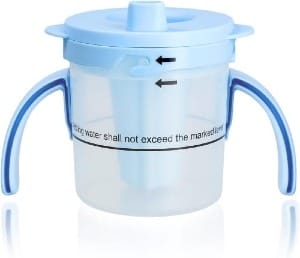
Recommended: SavvyBloom Dysphagia Cup
- Price: $25–$40
- Best for: People with moderate dysphagia who need precise sip volume control; also suitable across Levels 0–3 with different regulator sizes
- Watch out for: The lid requires correct alignment before pressing down — once you know the technique, it's straightforward, but it's not intuitive at first
- Full review: We've covered the SavvyBloom in detail — including which regulator matches which IDDSI level — in our complete SavvyBloom review
IDDSI Level 3 with Caregiver Assistance — Convalescent Cup
When drinking requires caregiver assistance — the person cannot hold the cup themselves, is in bed, or has very limited mobility — the cup design priority shifts to caregiver control rather than independent drinking.
Best cup type: Convalescent Cup
The convalescent cup's long, curved spout allows a caregiver to deliver liquid in small, controlled amounts from the side — without requiring the person to tilt their head or grip the cup. It's particularly useful in post-hospital recovery, end-of-life care, or for anyone who is primarily bed-bound.
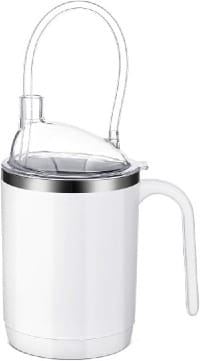
Recommended: Jingmore Convalescent Cup
- Price: $20–$35
- Best for: Assisted drinking in bed or low-mobility settings; caregiver-controlled delivery of thin to moderately thick liquids
- Watch out for: The long spout requires careful positioning — the caregiver controls the tilt entirely, so pace and volume are the caregiver's responsibility, not a mechanical feature of the cup
IDDSI Level 4 — Extremely Thick
Level 4 liquids hold their shape completely — they do not flow when a container is tilted and cannot be drawn through a spout or straw. They are not drunk from a cup. They are taken with a spoon, in the same way as a thick purée.
If your loved one has been prescribed Level 4 liquids, a standard cup of any type is not appropriate. The right equipment is a spoon and a bowl or ramekin — the same tools used for Level 4 puréed foods.
If you are thickening drinks to Level 4, use a deep spoon rather than a flat one, and serve in a small bowl rather than a cup. The Thick-It Pureed Caramel Apple Pie referenced in our recipe section is a good example of a Level 4 format — the consistency is taken by spoon, not drunk.
Not All Dysphagia Cups Regulate Flow — And the Difference Matters
One of the most common misconceptions about dysphagia cups is that any cup with a lid or a spout manages the swallowing risk. It isn't. There's a fundamental difference between cups that simply contain liquid and cups that actively control how much liquid reaches the mouth per sip — and for someone with moderate to severe dysphagia, that difference can be the difference between a safe mealtime and an aspiration event.
Cups That Contain But Don't Regulate
Most cups marketed as "dysphagia cups" or "sippy cups for adults" fall into this category. They have a spouted lid that prevents spilling, handles for grip stability, and a cutout or angle for positioning. What they don't have is any mechanism that limits how much liquid flows through the spout when the cup is tilted.
When a person with dysphagia tilts one of these cups, the amount of liquid that reaches the mouth depends entirely on how far and how fast they tilt, which is exactly the variable that dysphagia makes unreliable. A tremor, a moment of distraction, or simply tilting slightly too far delivers more liquid than the swallow reflex can handle.
Examples of contain-but-don't-regulate cups:
- Standard spouted adult sippy cups
- Nosey cups/cutout cups
- Convalescent cups with long spouts
- Most weighted cups
These cups are still appropriate for specific IDDSI levels and swallowing profiles — particularly for people with mild dysphagia, good oral motor control, or where positional support is the primary need rather than flow control. But they should be chosen with a clear understanding of what they do and don't do.
Cups That Actively Regulate Flow
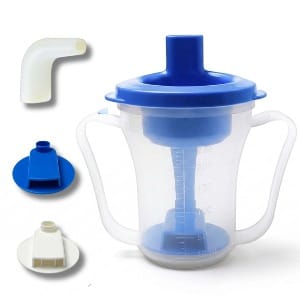
Flow-regulating cups use a physical mechanism to control the volume of liquid released per sip — regardless of how far the cup is tilted. The person could tilt the cup upside down and still only receive the amount the mechanism allows.
There are two main approaches:
Valve-based regulation — a valve inside the cup or lid opens when suction is applied and closes when it isn't. This prevents liquid from flowing freely when the cup is tilted. The limitation is that the valve controls the rate of flow but not the precise volume per sip — the person still controls how long they apply suction.
Regulator insert-based control — a physical insert sits inside the cup and acts as a reservoir. When the cup is tilted, only the liquid held inside the regulator reaches the spout — typically 5cc, 10cc, or 15cc per sip, depending on which insert is used. When the cup returns to an upright position, the regulator refills for the next sip. This is the most precise form of flow control available in a home-use cup because the sip volume is fixed and measurable regardless of the person's own suction or tilting behaviour.
The SavvyBloom uses the regulator insert approach — which is why it's the cup we recommend for moderate dysphagia and why the choice of 5cc, 10cc, or 15cc regulator matters clinically. We cover exactly how to match the regulator size to the IDDSI level in our full SavvyBloom review.
Which Type Does Your Loved One Need?
A simple way to think about it:
| Situation | Cup Type Needed |
|---|---|
| Mild dysphagia, good oral control, thin liquids | Contain cup — nosey cup or spouted sippy cup |
| Tremor or grip issues only, swallow function relatively intact | Weighted contain cup |
| Caregiver-assisted drinking, person cannot self-manage | Convalescent cup — caregiver controls the tilt |
| Moderate dysphagia, inconsistent swallow reflex | Flow-regulating cup — valve or regulator type |
| Moderate to severe dysphagia, precise sip volume needed | Flow-regulating cup with regulator inserts — SavvyBloom |
| Level 4 extremely thick — any cup | Spoon only — no cup is appropriate |
If you are unsure which category applies, this is a specific question worth raising with your SLP at the next appointment. Many SLPs have cup samples available to trial in the clinic, which is a much more reliable way to assess the right cup than ordering online and hoping.
Read more about the 7 levels of IDDSI for food: Understanding IDDSI Levels: Your Complete Guide to Safe Eating with Dysphagia
Frequently Asked Questions
Which dysphagia cup is best for IDDSI Level 0 thin liquids?
A nosey cup (cutout cup) is the most appropriate choice for thin liquids. The cutout accommodates the nose so the person can drink in a chin-tuck position — the safer head position for thin liquid management — without tilting their head back. The TalkTools CutOut Nosey Cup is the most widely used option for this purpose.
Which cup works best for IDDSI Level 2 or Level 3?
For Level 2, a spouted adult sippy cup like the Peaoop provides adequate flow control at a lower price point. For Level 3, a flow control cup with interchangeable sip volume regulators — specifically the SavvyBloom — gives more precise control. The 10cc regulator is typically appropriate for Level 3; confirm with your SLP.
Can one cup work across all IDDSI levels?
Flow control cups with adjustable valves or interchangeable regulators come closest — the BaseSmall and SavvyBloom can both be adjusted for different levels. However, at Level 0 (thin), most SLPs also recommend a nosey cup for the positional benefit. A combination of a nosey cup for thin drinks and a flow control cup for thicker consistencies covers most situations.
What is the difference between the SavvyBloom and the BaseSmall flow control cup?
Both are flow control cups but they work differently. The BaseSmall uses an adjustable valve that the caregiver sets before each use. The SavvyBloom uses interchangeable physical regulator inserts (5cc, 10cc, 15cc) that control exact sip volume — you swap the insert rather than adjusting a valve. The SavvyBloom's approach gives more consistent, measurable volume control per sip; the BaseSmall is simpler to operate day to day.
Do dysphagia cups need to be recommended by an SLP?
The SLP recommends the IDDSI level and the type of cup appropriate for the person's swallowing profile. The specific product within that category is usually a caregiver or patient choice. If you're unsure whether to use a nosey cup, a sippy cup, or a flow control cup, raise it at the next SLP appointment — many SLPs have samples available to trial in clinic before you commit to buying.
How do I clean a dysphagia cup properly?
Rinse immediately after every use — dried thickened liquid is significantly harder to remove than fresh residue. Most dysphagia cups are dishwasher safe to 60°C on the top rack. Pay particular attention to the spout, valve, and any regulator inserts — use a thin cleaning brush to clear these thoroughly. Replace the cup if any component shows cracking, discolouration, or a faulty seal.
References
International Dysphagia Diet Standardisation Initiative. (2019). IDDSI Framework and Descriptors. https://www.iddsi.org/standards/framework
American Speech-Language-Hearing Association. (n.d.). Adult dysphagia (Practice Portal). https://www.asha.org/practice-portal/clinical-topics/adult-dysphagia/
National Foundation of Swallowing Disorders. (n.d.). Adaptive feeding devices for dysphagia management. https://swallowingdisorderfoundation.com/adaptive-feeding-devices/
Sharma, S., et al. (2019). Adapted feeding utensils for people with Parkinson's-related or essential tremor. PubMed. https://pubmed.ncbi.nlm.nih.gov/30915973/
Héroux, M. E., et al. (2019). Tremor control devices for essential tremor: A systematic literature review. PMC. https://pmc.ncbi.nlm.nih.gov/articles/PMC6898897/