Chiu Chow Congee Recipe — Hong Kong Style (IDDSI Level 3)
Chiu Chow congee reaches IDDSI Level 3 at a 10:1 ratio. Full recipe with water ratio guide, fortification options, and IDDSI testing steps.

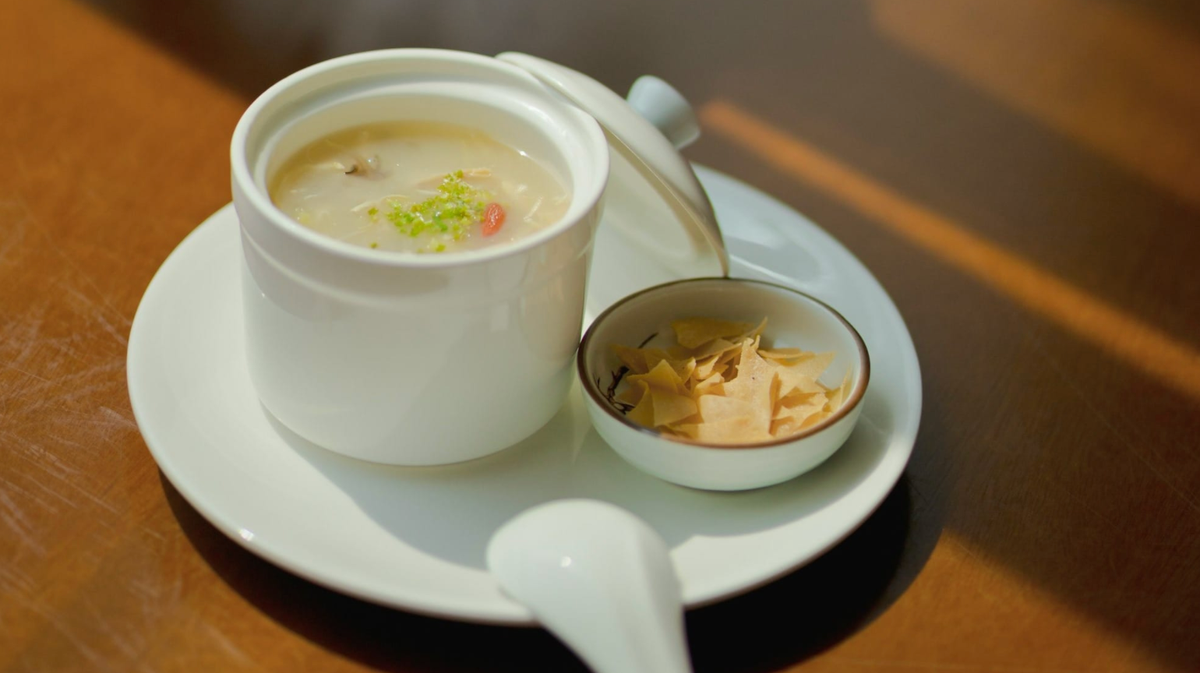
Smooth, savoury, and deeply comforting — Hong Kong's Chiu Chow congee cooks rice in a large quantity of water until the grains fully disintegrate into the broth. At a 10:1 water-to-rice ratio, it naturally reaches IDDSI Level 3 (Moderately Thick / Liquidised).
IDDSI Level 3. Dysphagia-Adapted Hong Kong Congee
The Chiu Chow style of Hong Kong congee uses a very high water-to-rice ratio and simmers for a long time until the rice grains fully dissolve into the liquid. The IDDSI team specifically tested Hong Kong congee styles in their Rice Porridge Around the World (2021) publication. The Chiu Chow style — where the rice fully disintegrates — produced results in the Level 3 range at standard preparation.
The water ratio is the primary control variable for this recipe. More water produces a lower level. Less water produces a higher level.
What you need:
| Ingredient |
|---|
| The Congee: |
| ¼ cup (50g) long-grain or jasmine white rice |
| 2½ cups (600ml) water or light chicken broth — the 10:1 ratio |
| Pinch of fine salt |
| 1 tsp light soy sauce (optional — adds flavour without altering consistency) |
| Optional Fortification: |
| 1 tbsp unsalted butter or a few drops sesame oil — stir in after cooking |
| 1 tbsp smooth blended chicken — verified at Level 3 before adding |
| 1 soft-cooked egg yolk — stir through after cooking |
| 1 tsp full-fat cream cheese — stir through for protein and calories |
Avoid: ginger slices (remove before serving if used during cooking), whole spring onion, fried shallots, crispy toppings, chilli oil, sesame seeds, or any garnish that creates a mixed texture.
Cooking Steps (Standard Preparation)
- Rinse the rice: Rinse under cold water until mostly clear.
- Combine and bring to a boil: Place rice and water or broth in a saucepan. Bring to a boil over medium-high heat, stirring occasionally.
- Reduce and simmer: Reduce heat to low. Simmer with the lid slightly ajar for 45–60 minutes, stirring every 10 minutes. The rice will gradually break down, and the liquid will thicken as starch is released from the grains.
- Watch for full disintegration: Chiu Chow congee is ready when the individual rice grains are no longer identifiable — the mixture should look uniformly smooth and silky. If grains are still visible, continue simmering.
- Season: Add salt and a small amount of soy sauce if using. Stir in any fortification additions.
- Test before serving: Fork drip test and spoon tilt test at serving temperature.
The Dysphagia Transformation (Choose Your Level)
For IDDSI Level 3 — Moderately Thick / Liquidised
- Water ratio: 10:1 water-to-rice (2½ cups water to ¼ cup rice). Cook for 50–60 minutes until grains fully disintegrate.
- Consistency target: Drips slowly through fork prongs in separate dollops. Flows and spreads from a tilted spoon.
- Temperature note: Like all starch-based porridges, Chiu Chow congee thickens as it cools. Level 3 at 60°C may become Level 4 at 45°C. Serve promptly and retest if the person eats slowly.
- If too thick: Add a tablespoon of hot water or broth, stir thoroughly, retest.
- If too thin: Simmer uncovered for 5–10 more minutes, stirring, to allow evaporation and further starch thickening.
For IDDSI Level 4 — Puréed / Extremely Thick
- Water ratio: 6:1 to 8:1 water-to-rice. Cook for 40–50 minutes. Allow to cool to 45°C — natural thickening as temperature drops will produce Level 4.
- Alternatively: Prepare at Level 3 ratio and allow to cool — the congee will naturally thicken to Level 4 as temperature drops.
Safety Checks (The IDDSI Tests)
- Fork Drip Test (Level 3): Lift a forkful and observe. Slow separate dollops = Level 3. Free-flowing stream = below Level 3. Nothing drips = Level 4.
- Spoon Tilt Test (Level 3 & 4): Level 3 flows and spreads. Level 4 slides off in one cohesive movement.
- Grain check: Run a clean spoon through the surface. No individual grain structure should be detectable. If graininess is felt — continue cooking.
- Temperature check: Test at the temperature at which it will be eaten. Congee thickens significantly as it cools.
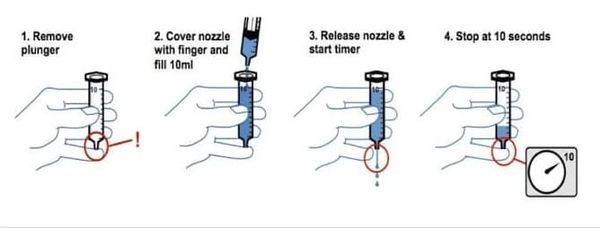
Read the guide here: IDDSI Flow Test at Home: Step-by-Step Guide With Photos
Variations
Chicken broth base: Replace water entirely with strained light chicken broth. Adds electrolytes, flavour, and caloric density without altering the IDDSI level significantly.
Ginger-infused: Add 2–3 slices of fresh ginger during cooking for flavour — remove all pieces completely before testing consistency and before serving.
Enriched version: Stir in 1 tablespoon of full-fat coconut cream after cooking for a richer, higher-calorie result. Retest consistency after adding.
Storage
- Refrigerated congee thickens substantially — it will likely be Level 4 or above after storage.
- Reheat over low heat with added water or broth, stirring continuously to restore the Level 3 consistency.
- Always retest after reheating.
- Best fresh. Refrigerate for up to 48 hours.
Important Safety Note
Always follow the IDDSI level recommended by your speech-language pathologist. The water ratio guidance above produces approximate results — always verify with the IDDSI fork drip and spoon tilt tests at serving temperature. Read more about how to do the consistency check here: IDDSI Flow Test at Home: Step-by-Step Guide With Photos
Three Golden Rules for Dysphagia Congee Cooking
- The water ratio is the control. More water = thinner = lower IDDSI level. Less water = thicker = higher level. Adjust in small increments and retest each time.
- Full disintegration is required. Visible rice grains in congee create a mixed texture — which is a Level 3 failure. Cook until no individual grain structure remains. The result should look uniformly silky.
- Serve promptly or retest. Congee thickens faster than most porridges as it cools. If the meal takes longer than 15 minutes, check consistency again mid-meal.
Back to the full porridge guide: Dysphagia-Friendly Porridge Recipes for Every IDDSI Level