Top 5 Dysphagia Cookbooks with Recipes
Five dysphagia cookbooks reviewed honestly — what IDDSI levels each covers, who each suits, and which is the safest first choice for someone newly diagnosed.

For individuals with swallowing difficulties, food isn’t just about nourishment; it’s about safety, dignity, and comfort. Thankfully, a growing number of dysphagia cookbooks are making it easier to prepare meals that meet the IDDSI texture guidelines while still tasting delicious. In this roundup, we’ve reviewed 5 top-rated cookbooks dedicated to dysphagia and pureed diets. Each is ranked based on practical use, clarity, variety, presentation, and alignment with real-life caregiver needs.
Finding a good dysphagia cookbook felt urgent in those first weeks after my mother's diagnosis. I wanted something that would tell me how to make her favourite meals safely — not a medical manual, and not a collection of recipes that required equipment I didn't own or ingredients she'd never eat. I worked through several before finding the ones that actually helped.
These five are the ones I'd recommend, in order of how broadly useful they are for home caregivers at different stages.
The books covered below:
| Book | Best For | IDDSI Levels | Cooking Skill | Standout Feature |
|---|---|---|---|---|
| Dysphagia Cookbook: 2500 Days | Comprehensive meal planning | 4, 5, 6 | Beginner–intermediate | Large recipe volume, 60-day meal plan |
| Modern Dysphagia Cooking | Adapting family favourites | 4, 5, 6 | Intermediate | 200+ comfort food adaptations |
| Soft Foods for Easier Eating | Clinical accuracy, nutritional focus | 4, 5 | Beginner | Dietitian-informed, medically aligned |
| Dysphagia Cookbook (Robinson) | Simple routines, meal planning | 4, 5 | Beginner | 28-day meal plan included |
| The Dysphagia Cookbook (Achilles) | Clean ingredients, no-fuss meals | 4, 5 | Beginner | Widely recommended by SLPs |
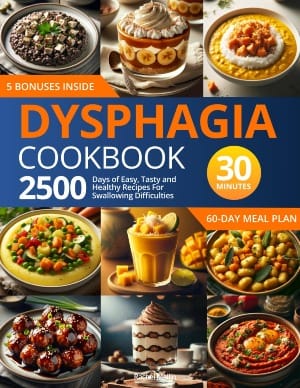
1.Dysphagia Cookbook: Easy, Tasty, and Healthy Recipes for Swallowing Difficulties
Link: Amazon
Best For: Comprehensive meal planning and modern design
This is the most well-rounded book on the list. With clear instructions, a clean layout, and modern recipes, it strikes a balance between nutritional value and taste without overwhelming caregivers. Recipes are creative and colorful, catering to multiple IDDSI levels. There's strong attention to ingredients, prep time, and real-life usability. A great tool for both home caregivers and professionals.
IDDSI levels covered: 4, 5, and 6 — puréed through soft and bite-sized
Honest limitation: The title's "2500 days" claim is marketing — the book contains a 60-day meal plan with recipe variations across that period, not 2500 distinct recipes. The author is self-published rather than clinically credentialled, which matters less than the quality of the recipes themselves — but worth knowing if you're comparing against clinically-authored books.
Practical note: The modern design and full-colour layout make it the most visually accessible book on this list — easier to follow in a busy kitchen than a text-heavy clinical cookbook. A good first cookbook for someone newly navigating dysphagia meal preparation.
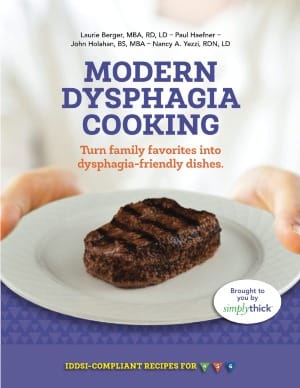
2. Modern Dysphagia Cooking: Turn Family Favorites into Dysphagia-Friendly Dishes
Link: Amazon
Best For: Comfort food lovers and high-volume variety
This is a standout for quantity and warmth. Over 200 recipes take classic American comfort foods and rework them into smooth, cohesive meals. You’ll find things like mac & cheese and meatloaf made IDDSI-appropriate without sacrificing flavor. The recipes are IDDSI compliant for levels 4, 5, and 6. Some recipes may lean heavily on prep work, so it’s ideal for those who are already confident in the kitchen.
IDDSI levels covered: 4, 5, and 6 — specifically labelled per recipe
Who created it: This book was developed in partnership with SimplyThick — the same brand as the gum-based thickener we recommend in our thickener guide. That connection is worth knowing — the recipes are designed to work well with SimplyThick products specifically, though most adapt to other thickeners.
Honest limitation: The comfort food focus means the recipe range skews American — families looking for Asian, Mediterranean, or other cuisine styles will find fewer options here.
Practical note: The family-favourite adaptation concept is the most practically useful approach in any dysphagia cookbook — it means the person with dysphagia can eat a version of the same meal as everyone else at the table, which matters enormously for dignity and enjoyment. This book does that better than any other on this list.
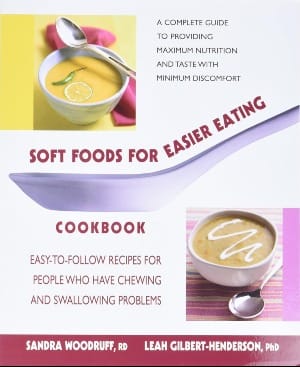
3. Soft Foods for Easier Eating Cookbook: Easy-to-Follow Recipes for People Who Have Chewing and Swallowing Problems
Link: Amazon
Best For: Nutritional balance and medical alignment
This classic-style cookbook blends dietary science with gentle flavors. It leans toward basic dishes, think broths, purees, and smoothies, with a noticeable emphasis on nutritional value. While the design feels a bit dated, it's deeply informed by clinical experience and is a go-to for dietitians.
IDDSI levels covered: Primarily Level 4 and 5 — puréed, minced and moist
Who created it: Written by a registered dietitian — the clinical background shows in the nutritional annotations and the careful attention to caloric density, which matters for dysphagia patients at risk of weight loss.
Honest limitation: The design is noticeably dated — this is an older book,, and the photography and layout reflect that. For caregivers who are already cooking-confident and primarily want clinical accuracy, that's a minor issue. For someone who finds a well-designed cookbook more motivating to use, it's worth knowing upfront.
Practical note: This is the book most likely to be recommended by a hospital dietitian at discharge, which means if you've been referred to a dietitian as part of your loved one's dysphagia care, it's worth asking if they have a copy to look at before purchasing.
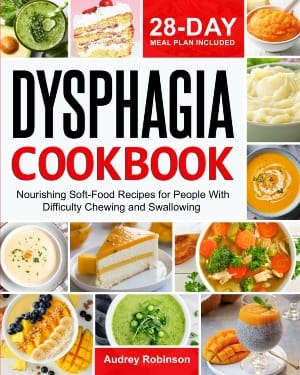
4. Dysphagia Cookbook: Nourishing Soft-Food Recipes for People With Difficulty Chewing and Swallowing | 28-Day Meal Plan Included
Link: Amazon
Best For: Minimalists and those looking for easy-to-follow routines. Includes meal planning
A solid but very simple cookbook. Its approach is practical, perfect for quick, fuss-free meals. However, the book has limited variation and feels more like a starter guide than a comprehensive solution.
IDDSI levels covered: Level 4 and 5 — with the 28-day meal plan structured around both levels
Honest limitation: The recipe variety is the most limited of the five books — the "simple and fuss-free" approach means less culinary creativity. If the person with dysphagia is a food lover who misses variety, this book alone won't sustain their interest long-term. Better used alongside a more varied cookbook.
Practical note: The 28-day meal plan is the standout feature. For caregivers who find daily meal decisions exhausting — which is most caregivers — having a full month of meals planned and shopped for in advance removes one significant daily cognitive burden. That practical value alone makes it worth having on the shelf.
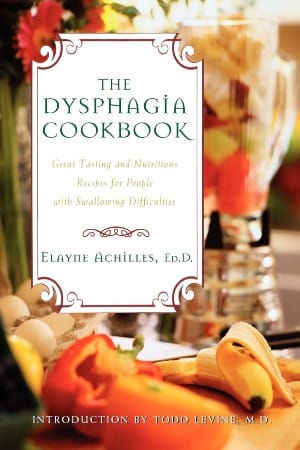
5. The Dysphagia Cookbook: Great Tasting and Nutritious Recipes for People with Swallowing Difficulties
;Link: Amazon
Best For: Nutritional purity and simplicity
This is a straightforward book that favors simple, no-fuss recipes with clean ingredients. It's best for caregivers who want nourishing meals that are easy to prepare. However, it lacks visuals and may feel a bit too clinical or plain for more adventurous eaters.
IDDSI levels covered: Level 4 and 5 — with guidance on adapting recipes across levels
Who created it: Elayne Achilles is an SLP — one of the few dysphagia cookbooks authored by a practising speech-language pathologist rather than a general food writer or dietitian. That clinical authorship is the book's most significant credential and is why it's widely recommended by SLPs.
Honest limitation: The lack of photography makes it less kitchen-friendly than the other books here — recipe books without visuals require more confidence to follow, particularly for modified texture cooking, where seeing the correct consistency in a photo would be helpful.
Practical note: If your SLP has not recommended a specific cookbook, this is the safest default choice — it's the one most likely to align with the clinical advice your loved one has already received. The SLP authorship means the IDDSI level guidance throughout is clinically accurate rather than approximated.
If you're buying one book to start, the Elayne Achilles Dysphagia Cookbook is the safest first choice for clinical accuracy, and Modern Dysphagia Cooking is the best choice if adapting family meals is the priority.
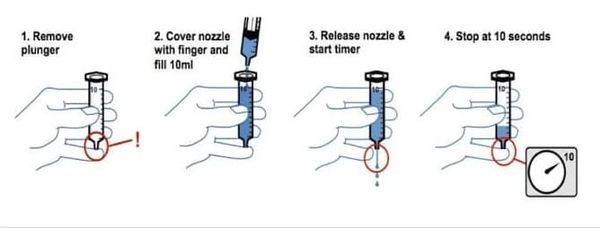
A note on all dysphagia cookbooks: even IDDSI-aligned recipes need to be verified at home. Oven temperatures, blender power, and ingredient variations all affect the final consistency. Always check any prepared dish with the spoon tilt test before serving — our IDDSI flow test guide covers both the syringe test for liquids and the spoon tilt test for foods.
For recipes you can start using today without buying a book, our recipe section has dishes built for IDDSI Levels 4–6 with at-home consistency checks built into each one.
Read more about living with dysphagia: How To Do IDDSI Syringe Flow Test at Home.
Frequently Asked Questions
Are dysphagia cookbooks IDDSI-certified?
No cookbook is formally certified by IDDSI — the IDDSI framework is a set of internationally standardised definitions and testing methods, not a certification programme. What "IDDSI-aligned" means in the context of cookbooks is that the recipes have been designed to meet the physical criteria for specific IDDSI levels. The quality and accuracy of that alignment varies between books — books authored by SLPs or dietitians with dysphagia expertise tend to be more reliably aligned than general soft-food cookbooks that have adopted IDDSI terminology retrospectively.
What is the best dysphagia cookbook for someone newly diagnosed?
For someone newly diagnosed, the most important features are: clear IDDSI level labelling per recipe, simple preparation methods that don't require specialist equipment, and a meal plan that removes daily decision-making. The Dysphagia Cookbook (Robinson) with its 28-day meal plan addresses the last two, while the Achilles book addresses clinical accuracy. Using both together — Achilles for clinical confidence, Robinson for daily structure — is a practical starting approach.
Do dysphagia cookbooks cover all IDDSI levels?
Most dysphagia cookbooks focus on Levels 4 (puréed), 5 (minced and moist), and 6 (soft and bite-sized). Recipes for Level 3 (moderately thick) are less common in cookbooks because at this level most foods are liquid-modified rather than solid-modified. Levels 6 and 7 recipes overlap significantly with general soft food cooking and are sometimes covered in mainstream low-chew cookbooks as well as specialist dysphagia ones.
Can I use a regular soft food cookbook instead of a dysphagia-specific one?
With caution. General soft food cookbooks — including many sold for post-surgery or elderly nutrition — are not written with dysphagia safety in mind. They may include mixed textures, foods that form a sticky bolus (bread, rice, stringy meats), or recipes that don't meet IDDSI Level 4 criteria even though they appear soft. A dysphagia-specific cookbook written with IDDSI awareness is significantly safer for someone with a formal dysphagia diagnosis. If using a general soft food cookbook, always verify each dish with the spoon tilt test before serving.
My loved one finds dysphagia food unappetising — will a cookbook help?
Often yes — the most common reason modified food is rejected is appearance and lack of variety, not taste. A good dysphagia cookbook addresses both: presenting modified food as recognisable meals rather than clinical preparations, and providing enough variety that the person doesn't eat the same three puréed dishes every week. The Modern Dysphagia Cooking book specifically addresses the dignity dimension — adapting comfort food classics so the person with dysphagia eats a version of the same meal as the rest of the family.