Semolina Porridge Recipe for Dysphagia (IDDSI Level 3–4)
Semolina porridge reaches IDDSI Level 3–4 depending on ratio. High-protein, milk-based dysphagia recipe with consistency adjustment guide.

Creamy, naturally smooth, and one of the most nutritionally complete porridges for dysphagia — semolina cooked in full-fat milk reaches IDDSI Level 3–4 and provides meaningful protein and calcium alongside carbohydrate. It also thickens predictably, making it one of the most reliable porridges to prepare at home.
IDDSI Level 3–4. Dysphagia-Adapted Semolina Porridge
Semolina porridge is known across Europe and the Middle East under many names — manna in Eastern Europe, krupicová kaše in Czech, and regional variations across dozens of countries. Made from durum wheat flour cooked in milk, it has a naturally smooth, lump-free texture when prepared correctly — making it one of the most IDDSI-compatible porridges available without a blender.
The semolina-to-liquid ratio and cooking time together determine the final IDDSI level. Importantly, semolina continues to thicken after cooking as the starch hydrates further — always prepare it slightly thinner than the target level and allow it to reach serving temperature before testing.
What you need:
| Ingredient |
|---|
| The Semolina Porridge: |
| 3 tbsp (30g) fine semolina — use fine-ground, not coarse |
| 1 cup (240ml) full-fat milk — for standard Level 3–4 |
| 1 tsp caster sugar or honey (adjust to taste) |
| Pinch of fine salt |
| For Enriched Version (recommended for malnutrition risk): |
| Replace standard milk with enriched milk: 1 cup full-fat milk + 4 tbsp dried skimmed milk powder, mixed smooth before cooking |
| Optional Fortification: |
| 1 tsp unsalted butter — stir in after cooking |
| 1 tbsp smooth cream cheese — stir in for protein |
| Pinch of cinnamon or vanilla extract — flavour only, no effect on consistency |
Avoid: dried fruit, whole seeds, coarse semolina (produces a grainy texture), cinnamon sticks or whole spices, any topping that creates a different texture from the base porridge.
Cooking Steps (Standard Preparation)
- Mix semolina with cold milk first: Take 2 tablespoons of the measured milk and stir it with the semolina until completely smooth — no dry lumps. This prevents clumping when the semolina hits hot milk.
- Heat the remaining milk: Warm the remaining milk in a small saucepan over medium heat until just steaming — do not boil.
- Add semolina mixture: Pour the semolina-milk mixture into the hot milk while stirring constantly. Do not stop stirring.
- Cook and stir: Reduce to low heat. Cook for 3–5 minutes, stirring continuously. The mixture will thicken quickly — do not walk away.
- Remove from heat: The porridge continues to thicken off the heat as the starch hydrates. This is the most important variable in semolina — it is always thicker at serving temperature than immediately after cooking.
- Add flavour and fortification: Stir in sugar or honey, butter, cream cheese if using. Season with salt.
- Test at serving temperature: Allow to cool to approximately 50°C before testing.
The Dysphagia Transformation (Choose Your Level)
For IDDSI Level 3 — Moderately Thick / Liquidised
- Ratio: 3 tbsp semolina to 1 cup milk (standard recipe above).
- Cook for: 3 minutes only — remove from heat promptly.
- Test at: 55–60°C. At this temperature, correctly prepared semolina at this ratio typically reaches Level 3.
- If too thick at serving temperature: Add a tablespoon of warm milk, stir thoroughly, retest.
- Critical: Prepare slightly thinner than Level 3 immediately after cooking — it will thicken to Level 3 by the time it reaches the table.
For IDDSI Level 4 — Puréed / Extremely Thick
- Ratio: 4 tbsp semolina to 1 cup milk.
- Cook for: 5 minutes, stirring continuously.
- Test at: 45–50°C — at this temperature, the additional starch and cooling will reliably produce Level 4.
- Alternatively: Prepare at the Level 3 ratio and allow to cool to 45°C — semolina naturally thickens to Level 4 as temperature drops, making the same recipe work for both levels at different temperatures.
Safety Checks (The IDDSI Tests)
- Spoon Tilt Test (Level 3 & 4): Load a teaspoon and tilt sideways. Level 3: flows and spreads. Level 4: slides off in one cohesive movement.
- Fork Drip Test (Level 3): Slow separate dollops = Level 3. Free stream = below Level 3. Barely drips = Level 4.
- Lump check: Run a clean spoon through the surface before testing. Any detectable lumps mean the semolina was not stirred continuously — strain through a fine sieve and retest.
- Temperature check: Always test at serving temperature — semolina thickens more between stove and table than almost any other porridge.
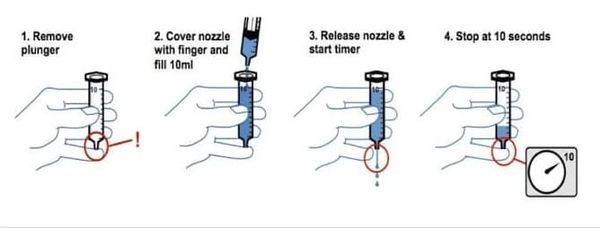
Read the guide here: IDDSI Flow Test at Home: Step-by-Step Guide With Photos
Variations
Vanilla and honey: Add ½ tsp vanilla extract and 1 tsp honey after cooking. Classic Eastern European flavour combination. No effect on IDDSI level.
Savoury semolina: Omit sugar. Add butter, grated Parmesan melted through completely, and a pinch of white pepper. Adds protein and a depth of flavour that improves palatability for those who find sweet porridges unappealing.
Cardamom and rosewater: A Middle Eastern variation. Add a pinch of ground cardamom and a few drops of rosewater after cooking. Culturally familiar for Arab and South Asian heritage patients.
Full cream version: Replace all milk with single cream for a significantly richer, higher-calorie result. The consistency is similar to the standard recipe, but caloric density is approximately double — particularly useful for patients with malnutrition risk.
Storage
- Semolina thickens dramatically when refrigerated — it will set almost solid after overnight storage.
- Reheat over low heat with added warm milk, stirring continuously until the desired consistency is restored.
- Always retest after reheating — semolina returns to a smooth consistency when reheated correctly.
- Best fresh. Can be refrigerated for up to 24 hours.
Important Safety Note
Always follow the IDDSI level recommended by your speech-language pathologist. Semolina thickens significantly between cooking and serving — always test at the temperature it will be eaten, not immediately after cooking. Read more about how to do the consistency check here: IDDSI Flow Test at Home: Step-by-Step Guide With Photos
Three Golden Rules for Dysphagia Semolina Cooking
- Stir continuously — no exceptions. Semolina that is not stirred continuously forms lumps that cannot be removed without sieving. Lumps are a Level 3 and 4 failure. Keep stirring from the moment the semolina hits the hot milk until it comes off the heat.
- It always thickens further. The starch in semolina continues hydrating for several minutes after cooking stops. Always cook to slightly thinner than your target level and allow natural thickening to complete at serving temperature.
- Enriched milk is the best nutritional upgrade. Adding dried milk powder to the cooking milk doubles the protein and calcium content without changing the recipe method. For someone at malnutrition risk — this is one of the simplest and most effective fortification strategies available.
Back to the full porridge guide: Dysphagia-Friendly Porridge Recipes for Every IDDSI Level