Uji Millet Porridge Recipe - Dysphagia (IDDSI Level 2–3)
Uji millet porridge is naturally IDDSI Level 2 — thickener required for Level 3. Recipe with thickening guide and syringe flow test steps.

Thin, naturally gluten-free, and deeply nutritious — East African uji is millet or sorghum flour cooked in water to a smooth, pourable consistency. In its traditional form, it is IDDSI Level 1–2. This recipe explains how to verify the level and how to thicken it safely for Level 3 prescriptions.
IDDSI Level 2 (with Thickener for Level 3). Dysphagia-Adapted East African Millet Porridge
Uji is the breakfast staple across Kenya, Uganda, Tanzania, and much of East Africa — sipped from a cup, flavoured with sugar or milk, and taken hot every morning. Unlike rice-based porridges eaten with a spoon, uji is traditionally drunk — which immediately signals its IDDSI classification. As traditionally prepared, uji is a Level 1–2 liquid.
This is the most important thing to understand before making uji for a dysphagia patient: for anyone prescribed Level 3 or above for liquids, traditional uji requires a commercial thickener to be safe. The recipe below covers both the traditional preparation and the thickened adaptation.
What you need:
| Ingredient |
|---|
| The Uji: |
| 2 tbsp millet flour — or sorghum flour, or a blend |
| 1 cup (240ml) water |
| 1 tsp sugar (optional) |
| 2 tbsp full-fat milk (optional — added after cooking) |
| For Thickening to Level 3 (required for Level 3+ prescriptions): |
| 1 SimplyThick EasyMix gel sachet — or equivalent gum-based thickener |
| Optional Fortification: |
| Replace water entirely with full-fat milk — increases protein, calcium, and calories |
| 1 tsp smooth peanut butter — stir through for protein and calories |
| 1 tsp honey — flavour and calories |
Avoid: adding lumpy or grainy flour (sieve the flour before using), adding milk at the boil stage (can cause scorching), adding thickeners directly without stirring (causes clumping).
Cooking Steps (Standard Preparation)
- Make a slurry: Place the measured millet flour in a small bowl. Add 3 tablespoons of cold water and stir until completely smooth — no dry lumps. This prevents lumping when the flour hits hot water.
- Heat remaining water: Bring the remaining water to the boil in a small saucepan.
- Add slurry: Pour the flour slurry into the boiling water while stirring constantly.
- Reduce and cook: Reduce to low heat. Cook for 3–5 minutes, stirring continuously. The mixture will thicken slightly.
- Add milk and sugar: Remove from heat. Stir in milk and sugar if using.
- Test the level: The traditional preparation typically produces IDDSI Level 1–2. Use the syringe flow test to confirm before serving or adding thickener.
The IDDSI Level Assessment — Critical for Uji
Unlike the other porridges in this collection, where cooking adjustments control the level, uji requires the syringe flow test to confirm where it lands — because the flour concentration, specific grain used, and cooking time all affect the final viscosity in ways that are harder to control visually.
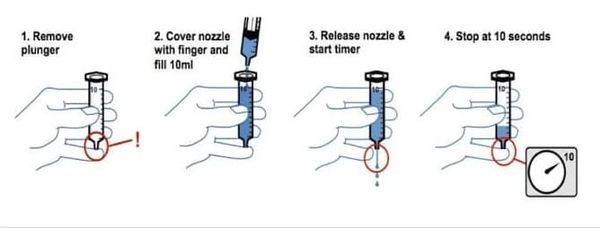
Syringe flow test results for uji:
- Less than 1ml remaining after 10 seconds = Level 0 (Thin)
- 1–4ml remaining = Level 1 (Slightly Thick)
- 4–8ml remaining = Level 2 (Mildly Thick)
- 8ml or more remaining = Level 3 (Moderately Thick)
To reach Level 3 from a Level 1–2 result:
Add a gum-based thickener (SimplyThick or Nutilis Clear) according to the manufacturer's instructions for Level 3. Stir thoroughly. Wait the full hydration time (60–90 seconds for gum-based thickeners). Test again with the syringe. Adjust if needed.
Why is a gum-based thickener specified for uji:
Starch-based thickeners continue thickening after mixing and behave unpredictably in hot liquids. Since uji is a hot preparation, gum-based thickeners are significantly more reliable — they reach their final viscosity within 60–90 seconds and do not continue thickening after that.
Our thickener comparison guide covers the differences in detail.
The Dysphagia Transformation (Choose Your Level)
For IDDSI Level 2 — Mildly Thick
- Traditional uji at standard preparation typically reaches Level 2 naturally.
- Verify with the syringe flow test — 4–8ml remaining after 10 seconds confirms Level 2.
- Appropriate for Level 2 (Mildly Thick) liquid prescriptions only.
For IDDSI Level 3 — Moderately Thick
- Prepare traditional uji as above.
- Test with a syringe — if below Level 3, add gum-based thickener, stir, wait 90 seconds, retest.
- Verify with fork drip test — slow separate dollops through the prongs confirms Level 3.
- Temperature note: Uji thickens slightly as it cools — test at serving temperature. A Level 2 result at 65°C may be Level 3 by 50°C without added thickener.
For IDDSI Level 4 — Not Recommended
Uji is not the appropriate base for Level 4. The flour concentration required produces an unpleasant pasty texture. For Level 4, use polenta or semolina from this collection instead.
Safety Checks (The IDDSI Tests)
- Syringe Flow Test (Level 2 confirmation): Fill a 10ml BD Slip Tip syringe, hold horizontally for 10 seconds. 4–8ml remaining = Level 2. Less = below Level 2. 8ml or more = Level 3.
- Fork Drip Test (Level 2 & 3): Level 2: drips in a steady stream through the prongs — slower than water but still continuous. Level 3: drips in slow, separate dollops.
- Temperature note: Uji thickens slightly as it cools. A Level 2 result at 65°C may be Level 3 by 50°C — test at serving temperature before adding commercial thickener.
Read the guide here: IDDSI Flow Test at Home: Step-by-Step Guide With Photos
Variations
Milk-based uji: Replace all water with full-fat milk. Increases protein, calcium, and caloric density significantly. The milk base also slightly thickens the result — test before adding commercial thickener, as it may already be closer to Level 3 with a full milk base.
Sorghum or maize flour version: The recipe above works identically with sorghum flour or maize flour. Each produces a slightly different flavour — sorghum is earthier, maize is slightly sweeter. IDDSI level behaviour is similar across all three.
Ogi (Nigerian variation): Fermented maize or sorghum porridge, similar to uji. IDDSI level behaviour is similar — test with the syringe before serving.
Storage
- Uji thickens as it cools and after refrigeration.
- Reheat with added warm water, stirring continuously until the desired consistency is restored.
- If thickener was added — retest after reheating as heating can alter thickener performance.
- Best served fresh. Consume within 24 hours.
Important Safety Note
Uji in its traditional form is IDDSI Level 1–2. It is below Level 3. Anyone prescribed Level 3 or above must have a commercial thickener added and verified with the syringe flow test before consuming uji. Do not assume the thickened result is Level 3 without testing. Always follow the IDDSI level recommended by your SLP. Read more about how to do the consistency check here: IDDSI Flow Test at Home: Step-by-Step Guide With Photos
Three Golden Rules for Dysphagia Uji Cooking
- Test first, thicken second. Make uji, test the natural level with the syringe flow test, then add thickener only if needed — and only in the amount needed. Adding thickener without testing means you don't know the starting point and risk over-thickening.
- Gum-based thickener only for hot preparations. Starch-based thickeners behave unpredictably in hot liquids. For uji served hot, use SimplyThick, Nutilis Clear, or equivalent gum-based thickener only.
- Uji stops at Level 3. This recipe is not suitable for Level 4. If your loved one is prescribed Level 4, choose polenta or semolina from this collection instead.
Full Porridge Guide: Dysphagia-Friendly Porridge Recipes for Every IDDSI Level