How to Modify Food Texture for Dysphagia: Essential Tools and Equipment for Home Use
Nobody had told us what "smooth enough" meant in practice. The hospital discharge letter mentioned "texture modification" and "IDDSI levels" without explaining either.


The week after my mother's dysphagia diagnosis, I stood in the kitchen staring at a blender I'd owned for years and realised I had no idea if it was actually good enough. Nobody had told us what "smooth enough" meant in practice, what tools we actually needed versus what was nice to have, or where to even start looking. The hospital discharge letter mentioned "texture modification" and "IDDSI levels" without explaining either.
That's what this guide is for. The kitchen can suddenly feel like a daunting place — but having the right gear makes an enormous difference to both safety and the quality of daily life. We've broken down exactly what you need, what it does, and why it matters, so you're not figuring it out alone at the kitchen counter.
What You Need to Know About Modifying Food Texture for Dysphagia
Before getting into the tools used to change food texture, it’s important to understand why texture matters in the first place. If the texture is too thin, too hard, or uneven, it can increase the risk of aspiration, which may result in people with dysphagia choking or having the food go into the airflow and lungs. Here is some helpful information you need to get familiar with:
IDDSI Level: The Standardized Food Thickness Levels
IDDSI Level is created by The International Dysphagia Diet Standardisation Initiative (IDDSI), a non-profit worldwide organization to educate people with or taking care of someone with dysphagia.
Read More: Understanding 7 IDDSI Levels, Your Complete Guide to Safe Eating with Dysphagia
The framework gives caregivers and clinicians a shared language for describing food and liquid textures. Food levels range from Level 3 (Liquidised) through to Level 7 (Regular), while liquids are classified from Level 0 (Thin) to Level 4 (Extremely Thick). It is created with deep and long years of research to make sure people with dysphagia can eat and drink as safely as possible.
Someone who struggles with thin liquids, for example, may need drinks thickened to Level 2 (Mildly Thick, nectar consistency) or Level 3 (Moderately Thick, honey consistency).
A person with more significant swallowing difficulty might need foods at Level 4 (Pureed) - smooth, with no lumps, chunks, or bits of skin.
Texture Modification Tools
Once you know the IDDSI level you're working with, having the right tools makes a significant difference in both the safety of what you're preparing and the time it takes. Here are some texture modification tools you can keep at home when you're adjusting to a lifestyle with dysphagia.

Thickening Agents
These are probably the first things most people turn to. Powders and gels like the Nestle ThickenUp or Thick-It, allow you to thicken drinks and soft foods to the target IDDSI level. You can thicken water, juice, coffee, tea, pretty much anything.
There are starch-based and xanthan gum-based options, and they behave a little differently. Xanthan gum tends to stay more stable over time and doesn't thicken further as it sits.
Read more: What Is a Gum-based Thickener? A Dysphagia Thickener Alternative You Might Love
High-powered Blender or Food Processor
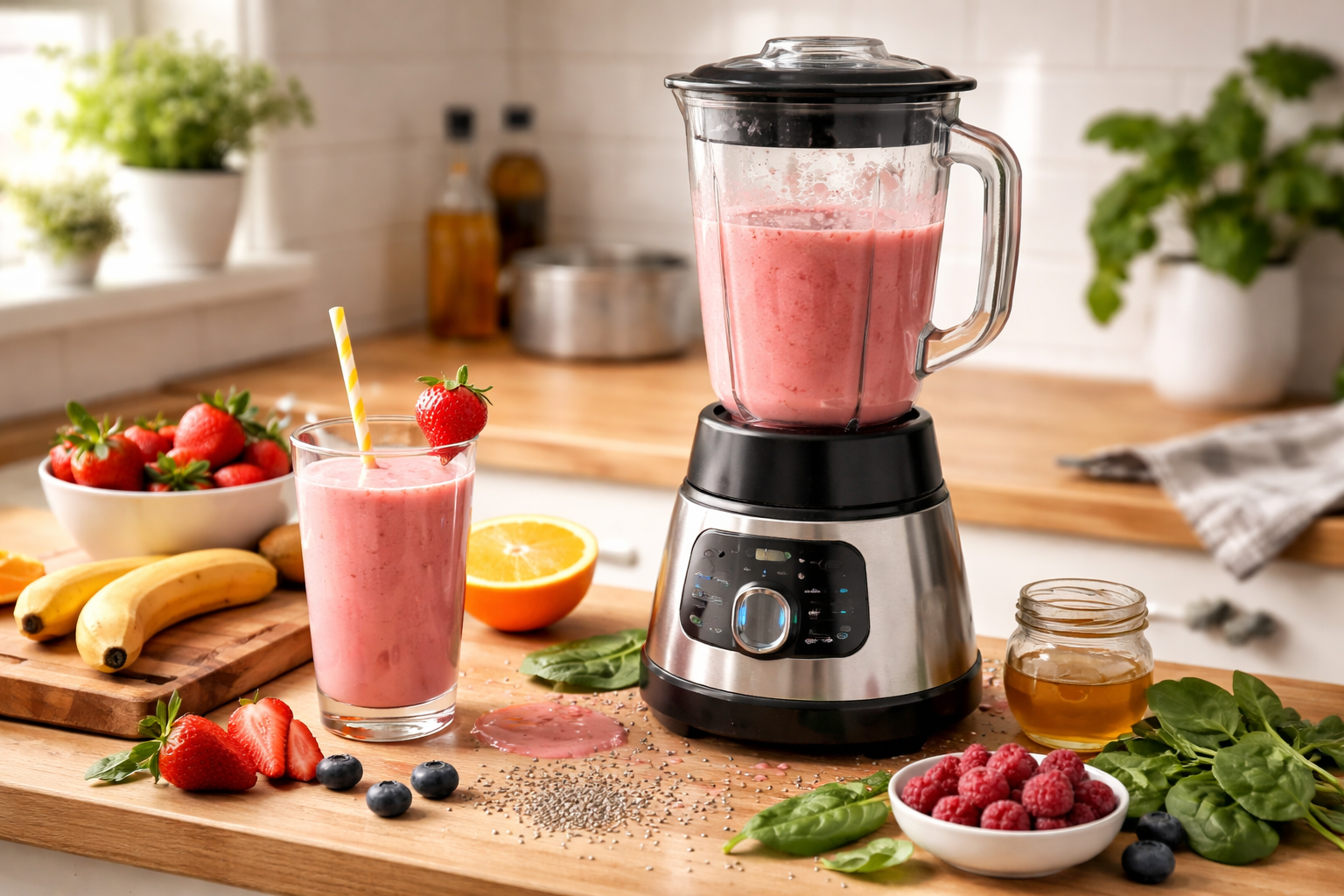
A regular blender can get you partway there, but it often leaves behind small lumps, bits of skin, or fibrous strands that aren't visible until someone has difficulty swallowing them.
A high-powered blender like a Vitamix gives you genuinely smooth purees, the kind that pass the IDDSI spoon tilt test without any sneaky chunks. If you're preparing dysphagia meals regularly, this is probably the most important tool to have. It also gives you real control when you're working across different texture levels, depending on what you're making.
Digital Food Thermometer
Food texture isn't always static; instead, it can change because of temperature changes, too. A drink you thicken to the right consistency can keep thickening as it cools, which means by the time it's finished, it might be too thick. Some hot foods thin out slightly when warm and then thicken again as they sit. It's worth checking consistency right before serving, not just when you're preparing it.
Temperature also affects swallowing itself. Cold foods and drinks can help stimulate the swallow reflex in some people, making it slightly easier to trigger. Others do better with warm. It depends on the person, so pay attention to what seems to work and keep it consistent.
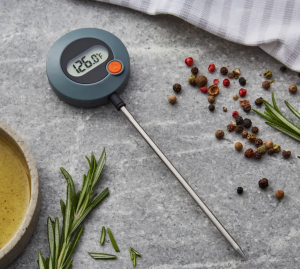
A digital food thermometer is one of those tools that seems minor until it isn't. It lets you confirm food is at a safe serving temperature and helps you catch when something has cooled enough that its texture might have changed.

Dysphagia Cooking Recipes Books
If you're just starting with texture modification, having a cookbook written specifically for dysphagia is genuinely helpful.
The recipes are already built around specific IDDSI levels, so you're not adapting regular recipes and hoping for the best. It also gives you a better feel for techniques like how to keep flavors strong, how to adjust consistency, what works, and what doesn't.
Read More: 5 Dysphagia Cookbooks With Recipes

Pre-made Dysphagia Friendly Meals
Sometimes you get too busy to do meal prep for dysphagia, and that's totally okay. Premade dysphagia meals are designed to meet specific texture standards, which means the consistency work is already done. They're useful as a backup option, and they're also a helpful reference for what a well-prepared pureed meal should actually look and feel like when you're getting started.
Read More: 4 Best Pureed Foods For Dysphagia You Can Buy Online
Specialized Drinkware
Standard cups often force you to tilt your head back, which opens the airway and increases choking risk.
- Nosey Cups: These have a cutout for the nose, allowing you to drink without tilting your head back. In practice, nosey cups are most useful for people who have reduced neck mobility — after a stroke, for example, or in someone with Parkinson's who has developed a forward head posture. The key thing to watch: even with a nosey cup, the person should still be sitting upright at 90 degrees. The cup removes the need to tilt the head back, but it doesn't compensate for a reclined body position, which still opens the airway.
- Weighted Cups: If your dysphagia is accompanied by tremors (like in Parkinson’s), these provide stability. The added base weight reduces the shaking that comes with tremors, but the benefit is most noticeable with mild to moderate tremors. For significant tremor, a weighted cup alone may not provide enough stability — pairing it with a non-slip mat under the cup and a two-handed grip tends to work better. Worth noting that weighted cups are heavier to lift, which can be tiring for someone with limited arm strength even if their tremor is well managed.
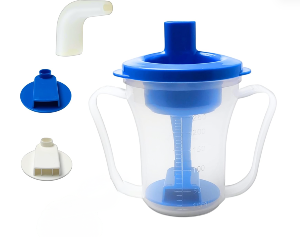
- Controlled-Flow Cups: The key variable with controlled-flow cups is the size of the flow restrictor — too large and the bolus is still unmanageable; too small and the person has to work hard to get liquid, that they tense up before swallowing, which can actually make the swallow worse. This is why this type of cup comes with interchangeable regulators (5cc, 10cc, 15cc) — it lets you find the right volume for the individual rather than accepting a fixed flow rate. We've covered exactly how to match each regulator size to an IDDSI level in our Dysphagia Cups review.
- Specialized Straws: One-way valve straws are particularly helpful for people with reduced lip seal or limited tongue control, because the liquid stays primed at the top of the straw between sips — the person doesn't have to generate suction from scratch each time. The important caveat: regular straws are generally not recommended for people with dysphagia because the sucking action can pull liquid in faster than the swallow reflex can respond. If a straw is being used, it should be a one-way valve straw at the recommendation of an SLP, not a standard straw as a workaround.
A note on cup choice generally: the right cup is the one that matches the specific swallowing deficit, not the most expensive or most specialised one. An SLP will often have strong views on which cup type suits a particular patient — it's worth bringing this question to an assessment session rather than trialling multiple options independently. Many SLPs can test different cups during a FEES or VFSS assessment and observe directly how the person manages each one.
Read More: Best Dysphagia Cups for Safe Drinking based on IDDSI Levelstremors
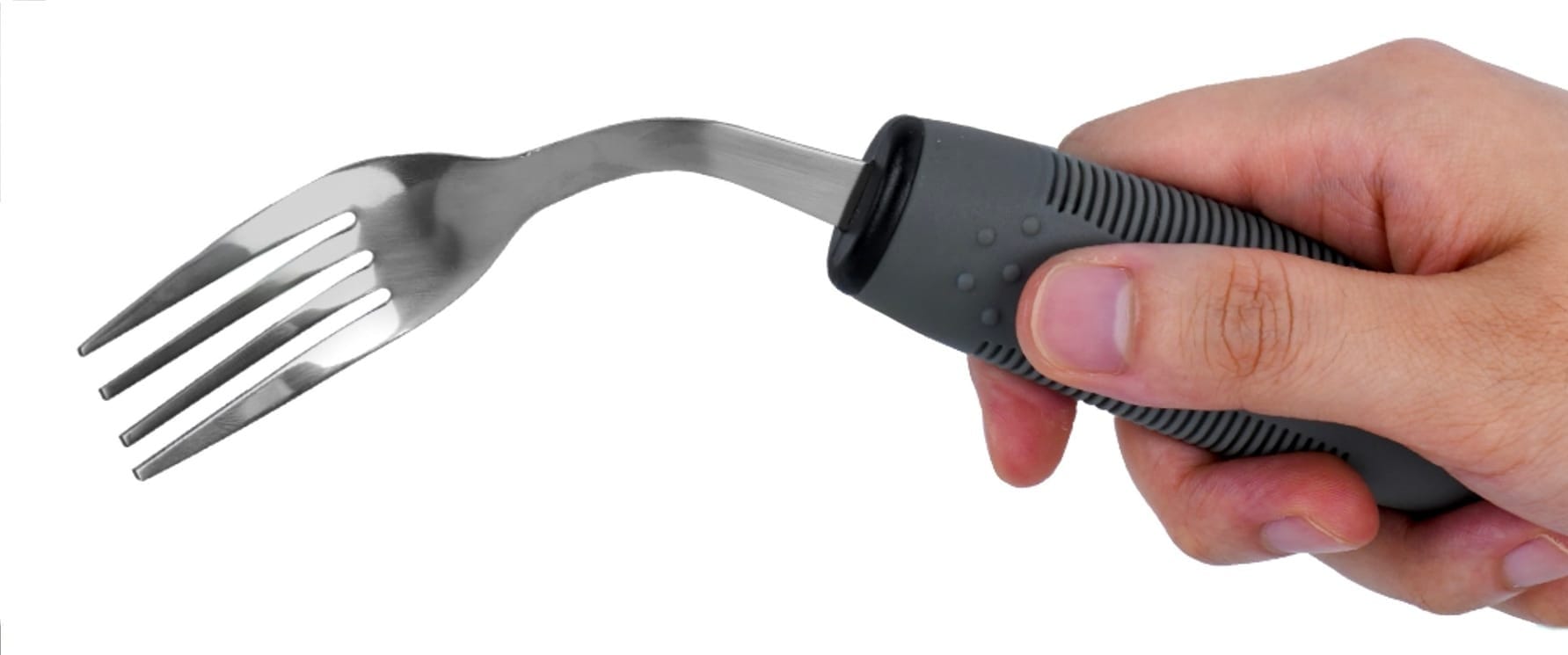
Adaptive Eating Utensils
Maroon Spoons: Maroon spoons are shallow, flat-bowled plastic spoons designed specifically for dysphagia feeding. The shallow bowl controls portion size precisely — each spoonful delivers a small, manageable bolus that the tongue can handle without being overwhelmed. The flat shape also encourages the feeder to deposit food on the middle of the tongue rather than the back, which reduces the risk of triggering a premature swallow before the person is ready.
They're particularly useful for people with poor lip seal, reduced tongue control, or hypersensitivity around the mouth. The firm plastic also gives cleaner feedback than a soft silicone spoon — you can feel clearly when the person has taken the food rather than guessing. If you're spoon-feeding a loved one and using a regular teaspoon, switching to a maroon spoon is one of the simplest and most immediately effective changes you can make.
Weighted or Angled Utensils: Weighted utensils add resistance that dampens the effect of hand tremors, making it easier to get food from plate to mouth without spilling. They're most helpful for people with Parkinson's or essential tremor who still have enough hand strength and coordination to self-feed but find a standard fork or spoon too unpredictable.
Angled utensils bend at the neck so the bowl or tines stay level even when the wrist angle changes — useful for people with limited wrist rotation after a stroke or for anyone whose dominant hand coordination has been affected. The practical thing to check before buying: weighted utensils are heavier by design, which helps with tremor but can be tiring for someone with reduced grip strength. If hand fatigue is already an issue, a lightweight angled spoon may be more practical than a weighted one.
A note on self-feeding and dignity:
The instinct when someone is struggling to eat is often to step in and help. Sometimes that's the right call — but wherever possible, adaptive utensils that preserve independence are worth trying first. Eating is one of the most social and personal activities in daily life. Being able to feed yourself, even slowly and with adapted equipment, has a direct impact on quality of life and self-esteem that goes well beyond the mechanics of getting food into the mouth. Your SLP or an occupational therapist can assess which utensils are appropriate for your loved one's specific deficits and often has samples available to trial before you commit to buying.
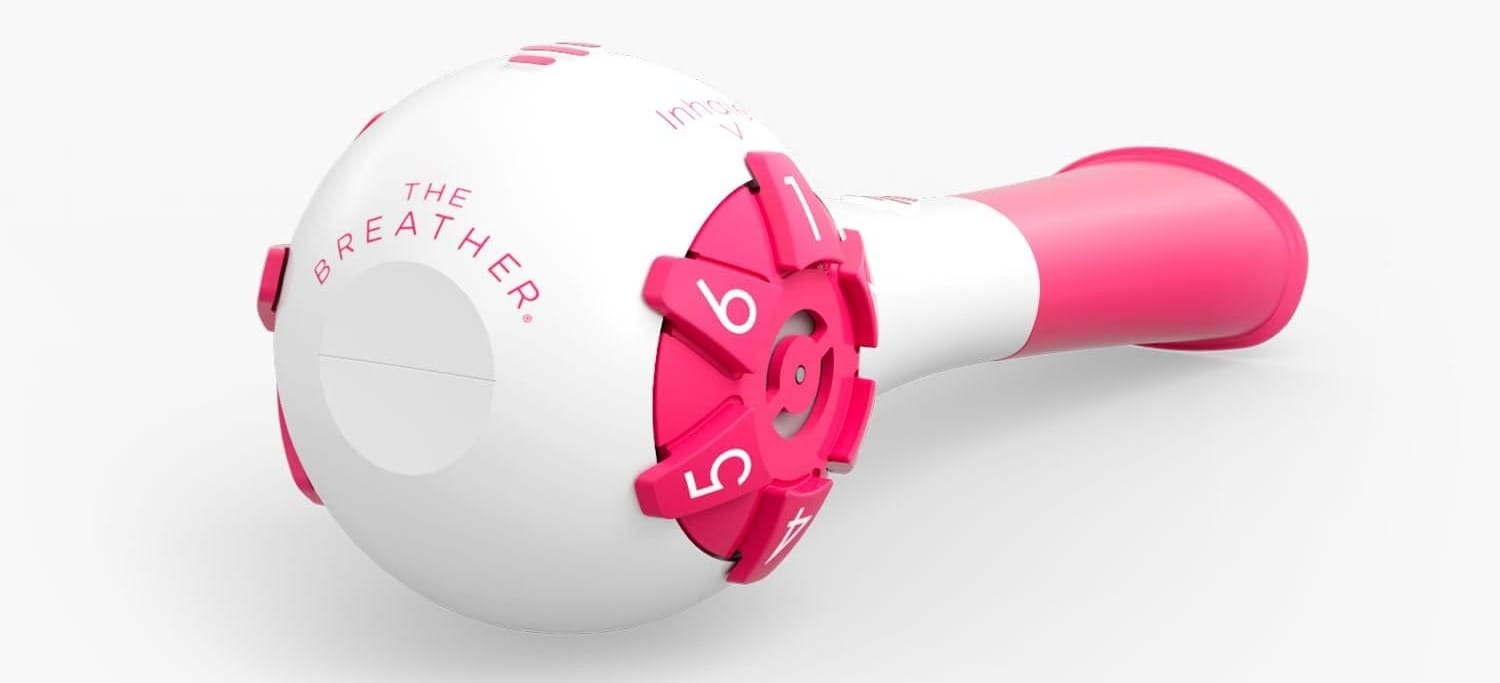
Therapy Tools
- Oral Swabs/Hygiene Kit: Oral health is critical for anyone with dysphagia. When the swallow is impaired, bacteria that naturally live in the mouth don't get cleared as efficiently — they accumulate, and if they're aspirated into the lungs along with food, saliva, or liquid, they can cause aspiration pneumonia. Regular oral care after meals — not just morning and night — significantly reduces this risk. If your loved one is on thickened liquids, oral residue is even more likely to linger, making post-meal cleaning especially important.
- Breather exersizer: Breathing exercises are a cornerstone of dysphagia rehabilitation because the acts of swallowing and breathing are neurologically linked. In a healthy system, your body momentarily stops breathing (apnea) during a swallow to ensure the airway is protected. In people with dysphagia, this coordination can break down — the breath hold is too short, too late, or doesn't happen at all, leaving the airway briefly exposed during the swallow. Respiratory muscle strength training with a device like The Breather works on both inhalation and exhalation strength, supporting the forceful airway closure and cough response that protect the lungs. It's most effective when prescribed and monitored by an SLP or respiratory therapist rather than used independently.
- (Tongue) Strengthening Devices. The tongue is the "engine" of the swallow. It forms the food bolus, controls its movement toward the throat, and generates the pressure needed to push it through. If tongue strength or range of motion is reduced (as commonly happens in stroke, Parkinson's, and age-related muscle weakening), the swallow becomes slow, effortful, and incomplete. Tongue resistance devices like the Iowa Oral Performance Instrument (IOPI) or simpler resistance buttons work by giving the tongue something to push against repeatedly, building strength the same way physiotherapy builds strength in any other muscle. As with the Breather, these are most effective when the exercises are prescribed around a specific deficit identified in a swallow assessment.
Visual & Tactical Aids
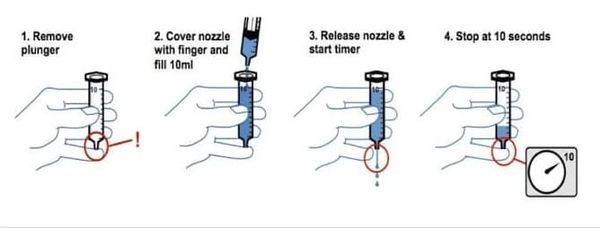
- The IDDSI Funnel/Syringe Test: This isn't for your mouth, but for your food. It’s a specific 10mL syringe used to test if a liquid is truly "nectar-thick" or "honey-thick" according to international safety standards. Read more: Flow Test Using Syringe Guide
- The "IDDSI" Chart: Keep a printed copy of the International Dysphagia Diet Standardisation Initiative framework on your fridge. It’s the gold standard for testing if your food is at the correct level (e.g., Level 4 Pureed vs. Level 5 Minced & Moist). Read more: Complete IDDSI Framework Detailed definitions
Where to Go From Here
Getting the right tools in place is the first practical step — but it's only one part of adapting to life with dysphagia.
If you haven't already worked through the IDDSI levels in detail, our complete IDDSI Level Guide explains each level in plain language with real food examples, so you know exactly what you're aiming for when you're preparing meals or thickening drinks.
For the drinking side specifically, the right cup matters as much as the right thickener. We've reviewed the SavvyBloom dysphagia cup in detail — including which flow regulator works for which IDDSI level — which is a good starting point if you're looking at controlled-flow options.
And when you're ready to start cooking, our recipe section has dishes built specifically for IDDSI Levels 4–6. Everything is tested for consistency and written for home cooks, not hospital dietitians — so the food actually looks and tastes like a meal.
One last thing worth saying: the adjustment period after a dysphagia diagnosis is genuinely hard, and the kitchen learning curve is steep at first. It gets easier. Most caregivers find that after a few weeks of working with a particular IDDSI level, the texture testing and prep become second nature — something you do quickly and without thinking, the way any cooking skill eventually does.
References
IDDSI Framework. (2019). Complete framework and detailed definitions. International Dysphagia Diet Standardisation Initiative. https://www.iddsi.org/framework
IDDSI. (2019). Testing methods. https://www.iddsi.org/Testing-Methods
Cichero, J. A. Y., et al. (2017). Development of international terminology and definitions for texture-modified foods and thickened fluids used in dysphagia management. Dysphagia, 32(2), 293–314. https://doi.org/10.1007/s00455-016-9758-y