Managing Dysphagia at Home: A Practical Guide for Caregivers
A practical guide to managing dysphagia at home — covering kitchen basics, safe mealtime practices, aspiration risks, swallowing exercises, and caregiver wellbeing. Written from lived experience


The week after my mother's dysphagia diagnosis, I sat at the kitchen table with a discharge letter, a list of IDDSI levels I didn't understand, and no idea where to start. Nobody had explained what mealtime would actually look like now. Nobody had warned me that thickeners behave differently in hot drinks. Nobody had told me that I would spend the next three months second-guessing every meal I put in front of her.
This guide is what I wish someone had handed me that week. It covers the practical, the clinical, and the emotional — because managing dysphagia at home involves all three.
Before Anything Else: Build Your Clinical Foundation
Home management of dysphagia is not something to navigate alone. Before implementing any changes, you need two things in place:
A confirmed IDDSI level from an SLP. The International Dysphagia Diet Standardisation Initiative (IDDSI) framework has eight levels — from Level 0 (thin liquid) to Level 7 (regular food) — and the appropriate level for your loved one can only be determined through a formal swallowing assessment. Do not estimate or borrow another person's prescribed level. Our complete IDDSI Level Guide explains each level in plain language.
An ongoing SLP relationship. Dysphagia management changes over time — what is appropriate at one stage may need to be adjusted as recovery progresses or as a condition changes. Regular SLP review is not optional; it is the clinical anchor that makes everything else in this guide safe to implement.
1. Understand the Kitchen Basics
Managing dysphagia at home begins in the kitchen. Once you understand what you're working with, the daily routine becomes significantly more manageable.
The essentials to have in place:
A reliable blender or food processor is the single most important piece of equipment. For Level 4 (puréed) foods, a standard blender is often not powerful enough to achieve the smooth, uniform texture required — a high-powered blender like a Vitamix or Ninja produces consistently better results. For Level 5 (minced and moist), a food processor is usually sufficient.
A thermometer matters more than most caregivers realise. Thickened liquids change consistency as they cool — a drink that is correct at serving temperature may drop below the target IDDSI level by the time it is finished. Check consistency at the temperature the person will actually drink it, not when you first prepare it.
Commercial thickeners are more reliable than homemade alternatives. Starch-based options like Thick-It are widely available and affordable. Gum-based options like SimplyThick or Nutilis Clear are more consistent and don't break down in acidic drinks or in the presence of saliva — they cost more but produce more predictable results. Our gum-based thickener guide and drink-specific thickener guide cover these in detail.
Read more here: Essential Tools and Equipment for Home Use
The IDDSI consistency test to do at home:
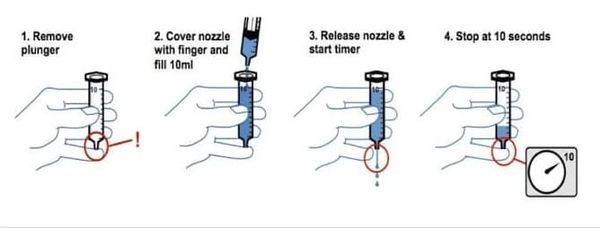
The spoon tilt test is your most important daily tool. Scoop a spoonful of the prepared food or drink and tilt the spoon sideways. For Level 4 (puréed), the food should slide off slowly in a single cohesive motion, leaving the spoon mostly clean. If it sticks firmly, it is too thick. If it pours off quickly, it is too thin. Our home flow test guide covers liquid testing in detail.
A note on medications:
Never crush or dissolve medications without checking with a pharmacist first. Many medications cannot be safely crushed — extended-release, enteric-coated, and sublingual formulations all have specific delivery mechanisms that are destroyed by crushing, making them either ineffective or dangerous. A pharmacist can advise on which medications can be safely administered with thickened liquids or modified foods and can often suggest liquid formulations as an alternative.
2. Make Mealtimes Structurally Safe
The environment and positioning during meals matter as much as what is served.
Positioning: The person should always be seated upright at 90 degrees during meals and for at least 30 minutes afterward. Never feed someone who is reclined, lying in bed, or drowsy. If your SLP has prescribed a specific head position — such as a chin tuck or head turn — ensure it is consistently maintained throughout the meal, not just at the start.
No distractions: Swallowing requires concentration for someone with dysphagia, particularly in neurological conditions. Turn off the television. Avoid conversations that require the person to respond mid-meal. Keep the dining environment calm and unhurried. This is not overly cautious — it is clinically appropriate.
Pace: Never rush a meal. Allow the person to set the pace. If they need to rest between bites, let them. Swallowing fatigue is real — many people with dysphagia manage the first half of a meal well and struggle increasingly toward the end as the muscles tire. Smaller, more frequent meals are often safer and better tolerated than three large ones.
Sips between bites: A small sip of the prescribed-consistency liquid between bites helps clear residue from the throat and reduces the accumulation of material that could be aspirated. This is a useful default practice — but confirm with your SLP that it is appropriate for your loved one's specific swallowing profile.
Oral hygiene after meals: Always perform thorough oral hygiene after every meal. Food residue left in the mouth after eating can be aspirated during the night alongside saliva. This is one of the primary mechanisms behind aspiration pneumonia in dysphagia patients. Use a soft toothbrush or foam swab, alcohol-free mouthwash, and ensure the mouth is clean before the person lies down.
3. Know the Difference Between Choking and Silent Aspiration
Every caregiver managing dysphagia at home needs to understand both of these clearly — because the dangerous one is the one you can't see.
Choking is visible and audible — coughing, gasping, distress. The response is the same as for any choking emergency: encourage forceful coughing if the person can cough, call emergency services if the airway is blocked and coughing is ineffective, and apply back blows and abdominal thrusts if trained to do so. Every dysphagia caregiver should complete a basic first aid course that covers the choking response.
Silent aspiration is the greater long-term risk. It occurs when food or liquid enters the airway without triggering a cough — the protective reflex is absent or impaired. There is no immediate distress. The material simply enters the lungs silently, accumulating over time and causing aspiration pneumonia. Silent aspiration is particularly common in neurological dysphagia — stroke, Parkinson's, dementia — and is the reason why dysphagia is associated with pneumonia mortality even in people who appear to be managing meals reasonably well.
Signs that may suggest silent aspiration is occurring:
- Recurrent chest infections or pneumonia without an obvious cause
- A persistent low-grade temperature after meals
- Gradual deterioration in breathing or stamina
- A wet or rattly chest sound after eating
If you suspect silent aspiration, request an SLP assessment urgently. A videofluoroscopic swallow study (VFSS) or fiberoptic endoscopic evaluation (FEES) can identify it directly.
4. Support Swallowing Exercises — Don't Lead Them
Swallowing exercises can meaningfully improve function in many dysphagia patients — but they must be prescribed and supervised by an SLP. This is not something to implement independently from a list.
The reason matters: dysphagia has many different causes and mechanisms, and an exercise that is appropriate for one person can be counterproductive or harmful for another. The Masako Maneuver, for example, strengthens pharyngeal wall contraction — but it is not appropriate for someone with cervical spine issues. Effortful swallow exercises are beneficial for some profiles and exhausting or unsafe for others.
What a caregiver can do at home is support and facilitate the programme an SLP has already designed — prompting the person to do their exercises, helping them maintain the correct technique, and reporting back to the SLP whether the exercises are being completed and how the person is responding.
For context on the types of exercises an SLP might prescribe, our Masako Maneuver article explains one of the most commonly used pharyngeal strengthening exercises in detail.
5. Keep Mealtimes Connected to Normal Life
One of the most consistent findings in dysphagia research is that the social and emotional dimensions of eating matter — not just clinically, but for the person's quality of life and willingness to eat at all. A person who is isolated from family mealtimes, served food that looks and tastes clinical, and rushed through eating as a functional task rather than a pleasurable one will eat less, resist modified food more, and lose weight faster.
Practical ways to maintain mealtime normality:
Cook one meal, not two. In most cases, you don't need to cook separately for the person with dysphagia. Cook the family meal together to the point just before the texture diverges — remove a portion and blend or modify it, then serve both at the same time. The person eats the same dish as everyone else, just prepared differently at the last step.
Plating matters. A beige purée served in a hospital bowl is demoralising. The same purée shaped with a mould, garnished with a sauce, and served on a proper dinner plate with the rest of the family's food looks like a meal. Silicone food moulds that reshape puréed proteins into their original form are inexpensive and genuinely change how meals feel.
Let the person set the pace. The goal of mealtime is not maximum caloric efficiency — it is a dignified, enjoyable shared experience that happens to be safe. Keeping that goal in mind changes how caregiving at the table feels, for both people.
6. Take Caregiver Burden Seriously
This is not a supplementary point. It is as clinically important as everything above it.
Research published in the International Journal of Nursing Studies found that 71% of caregivers of adults with dysphagia experience significant levels of burden, with spousal caregivers of stroke survivors and adult children caring for parents at the highest risk. This burden is not just emotional — it is physical, financial, and relentlessly continuous. Dysphagia doesn't take days off.
The burden of dysphagia caregiving is also frequently invisible. Most of the work happens in the kitchen, at the table, in the bathroom after meals — not in medical appointments, where it might be acknowledged or supported. Many caregivers carry it for months or years before naming it as something that is affecting their own health.
Practical steps that help:
Ask for a carer's assessment. In many countries, caregivers are entitled to their own formal assessment of needs — separate from the person they care for. This can unlock respite services, financial support, or simply give the caregiver's experience formal recognition.
Build in respite. Even a few hours a week where someone else manages mealtime makes a meaningful difference to sustainability. Respite doesn't have to be a formal service — a family member, a trained volunteer, or a community meal support programme can all provide this.
Connect with others in the same situation. Online dysphagia caregiver communities exist and are active. The particular combination of grief, frustration, and daily vigilance that dysphagia caregiving involves is not well understood by people outside it, but it is immediately recognised by those inside it.
Watch for signs that you are struggling: persistent sleep disruption, feeling resentful of the person you care for, neglecting your own medical needs, or a persistent sense that you cannot go on. These are not character failures — they are signals that the support around you is insufficient.
Taking care of yourself is not separate from taking care of your loved one. It is the same thing.
Frequently Asked Questions
What should I do if my loved one refuses to eat modified food?
Refusal is common and understandable — modified food represents loss, and accepting it can feel like accepting a permanent change. A few things that help: involve the person in choosing what they eat and how it is presented, focus on foods they have always loved, modified to the right texture, improve plating so food looks appetising rather than clinical, and address the emotional dimension directly rather than just the practical one. If refusal is severe and affecting nutrition, an SLP and a dietitian working together can often find a path forward.
How do I know if my loved one is getting enough nutrition?
Monitor weight weekly — unintentional weight loss is the clearest early indicator of inadequate intake. Other signs include increasing fatigue, poor wound healing, and reduced alertness. If you are concerned, request a referral to a dietitian who specialises in dysphagia. Oral nutritional supplements like Ensure or Fortisip can be thickened to the appropriate IDDSI level and used to supplement intake.
When should I call the doctor?
Immediately if: the person cannot swallow at all, is showing signs of respiratory distress after meals, develops a fever following a difficult meal, or loses more than 5% of body weight in a month. Non-urgently but promptly if: swallowing is getting consistently harder, the person is coughing more during meals than before, or recurrent chest infections develop.
Can dysphagia get better?
It depends entirely on the cause. Post-stroke dysphagia often improves significantly in the first weeks to months, particularly with SLP-guided therapy. Dysphagia in progressive neurological conditions like Parkinson's or dementia typically worsens over time. Age-related dysphagia can often be meaningfully managed with the right interventions. The trajectory is condition-specific and should be discussed with your SLP.
How do I manage meals when we are away from home?
With preparation. Carry pre-portioned thickener sachets (SimplyThick individual packets are ideal for this). Research restaurants ahead of time and call ahead to ask whether they can blend or mash dishes from the menu — most are willing if asked in advance. Pack a small kit: thickener sachets, a measuring spoon, the IDDSI testing syringe, and a backup soft food option. The first few outings are hardest; it becomes routine quickly.
References
Rangira, G. D., McKinstry, C. A., Francis-Coad, J., Mulhern, B., Mnatzaganian, G., & Ratcliffe, J. (2022). The perceptions and experiences of caregivers of patients with dysphagia: A qualitative meta-synthesis. International Journal of Nursing Studies, 136, 104357. https://www.ncbi.nlm.nih.gov/pmc/articles/PMC11366769/
Griffin, K., et al. (2024). Supporting safe swallowing of care home residents with dysphagia: How does the care delivered compare with guidance from speech and language therapists? International Journal of Language & Communication Disorders. https://onlinelibrary.wiley.com/doi/10.1111/1460-6984.13015
Cichero, J. A. Y., et al. (2017). Development of international terminology and definitions for texture-modified foods and thickened fluids used in dysphagia management: The IDDSI framework. Dysphagia, 32(2), 293–314. https://doi.org/10.1007/s00455-016-9758-y
Gomes, C. A., et al. (2015). Percutaneous endoscopic gastrostomy versus nasogastric tube feeding for adults with swallowing disturbances. Cochrane Database of Systematic Reviews, (5). https://pubmed.ncbi.nlm.nih.gov/25997528/
American Speech-Language-Hearing Association. (n.d.). Adult dysphagia (Practice Portal). https://www.asha.org/practice-portal/clinical-topics/adult-dysphagia/