
The IDDSI Level 4 Diet: Everything You Can Eat, What to Avoid, and a 7-Day Meal Plan
Everything you can and can't eat on an IDDSI Level 4 puréed diet — complete food lists, the caloric density problem most guides miss, fortification strategies, and a full 7-day meal plan.

When someone is prescribed IDDSI Level 4, the first question families ask is usually, "What can they eat?" The second question — which takes a little longer to arrive — is "how do I make sure they're actually getting enough nutrition?"
Both questions matter. And in my experience caring for elderly adults on puréed diets, the second one is the one that gets answered too late.
This guide covers both. What Level 4 actually means in a kitchen, not just in a clinical definition. What foods work, what foods don't, and why. How to build a week of meals that is varied enough to be sustainable. And how to make sure that a plate of smooth food is actually feeding the person — because the evidence on that is more concerning than most families realise.
What IDDSI Level 4 Actually Means
IDDSI Level 4 (Puréed) describes foods that are smooth and lump-free, not firm or sticky, require no chewing or bolus formation, fall off a spoon as an intact spoonful, and hold shape on a plate. Liquid must not separate from the solid.
In plain terms: the food is completely smooth, holds together as one cohesive mass, and can be moved from mouth to throat entirely by tongue pressure — no chewing required at all.
The consistency is completely smooth without any lumps, seeds, fibre, or tough pieces. If you can feel anything in the food — a grain, a fibre, a small piece — it is not Level 4.
The Two Tests That Confirm Level 4
The Spoon Tilt Test: Load a teaspoon with the puréed food and tilt it sideways. The food should slide off in one slow, cohesive movement, leaving the spoon mostly clean if it sticks firmly — too thick. If it runs off like liquid — below Level 4.
The Fork Pressure Test: Press a fork gently onto the surface of the puréed food. It should yield easily to light pressure and hold the fork impression. The food should form a mound above the fork on the fork drip test.
Our IDDSI flow test guide covers both tests in detail with photos.
The Nutrition Warning — Read This Before the Food List
Research has found that IDDSI Level 4 consumption is independently associated with malnutrition in older adults — with an odds ratio of 5.074 compared to regular diet. A significant difference in the prevalence of low BMI, reduced muscle mass, and reduced food intake was noted between IDDSI Levels 4 and 7.
In plain terms: people on Level 4 diets are significantly more likely to be malnourished than people eating regular food — and this isn't just because they're sicker. The puréeing process itself, the added liquids needed to achieve the right consistency, and the reduced palatability of smooth food all contribute to lower caloric and protein intake.
Several studies investigating the nutrition intake of people consuming puréed diets have shown inadequate energy and protein intake. Freshly made puréed diets have inconsistent nutrient levels and lower nutrient density than regular diets.
This means two things for the caregiver:
First — every Level 4 meal should be fortified wherever possible. Not with supplements alone, but with calorie-dense additions built into the cooking itself. More on this below.
Second — weigh the person weekly. Unintentional weight loss is the clearest early warning that caloric intake is insufficient. If weight is dropping without another explanation, the diet needs review — not just the texture, but the caloric density of what's being served.
The Level 4 Food List
✅ Foods That Are Naturally Level 4 (or Easily Made So)
These are the foods that form the practical foundation of a Level 4 diet — either naturally the right consistency or reliably achievable with standard home equipment.
Proteins:
- Smooth scrambled eggs — cooked soft and blended smooth, or made with added cream for a naturally smoother consistency. One of the most versatile Level 4 proteins — works at any meal.
- Puréed chicken — cooked until very tender, blended with chicken stock or cream sauce until completely smooth. Breast meat requires more liquid than thigh — thigh is generally more forgiving to purée.
- Puréed fish — white fish (cod, haddock, tilapia) blended with a white or cream sauce. Salmon works well with a cream or dill sauce. Remove all bones and skin before blending — pass through a fine sieve to confirm no fibres remain.
- Puréed beef or lamb — slow-cooked or braised until very tender, blended with cooking juices. Casserole cuts are better than steaks for puréeing — they contain more collagen, which helps achieve a smoother, more cohesive result.
- Smooth hummus — a naturally Level 4 food that requires no preparation. Check the brand — some contain whole chickpeas or paprika flakes. Plain smooth hummus is the most reliable option.
- Puréed lentils or dal — one of the easiest high-protein Level 4 foods to prepare at home. Red lentils in particular break down very smoothly without a blender.
- Smooth tofu — silken tofu blended with a smooth sauce. Naturally very soft and easy to purée to Level 4 consistency.
- Puréed legumes — cannellini beans, butter beans blended smooth with olive oil and stock. Economical, high in protein and fibre, and very easy to achieve Level 4 consistency.
Carbohydrates:
- Smooth mashed potato — one of the most reliable Level 4 foods. Use a potato ricer or food mill rather than a standard masher. Add butter and warm milk gradually. No skin. Our mashed potato recipe is designed specifically for Level 4, with a built-in consistency check.
- Puréed sweet potato — naturally sweeter and smoother than regular potato. Add butter and a small amount of cream. Very easy to achieve Level 4 consistency.
- Smooth polenta — well-cooked, soft polenta blended with butter and parmesan. Holds Level 4 consistency reliably and is calorie-dense — useful for fortification.
- Congee/rice porridge — well-cooked rice congee naturally reaches Level 3–4 depending on the water ratio. A higher water ratio produces Level 3; less water produces a thicker Level 4 texture. A practical and familiar option across many cultural backgrounds.
- Puréed pasta — pasta cooked beyond al dente until very soft, blended with a smooth sauce. The pasta itself becomes part of the sauce — the final texture is more like a smooth thick sauce than identifiable pasta. Works well with carbonara, cheese sauce, or smooth tomato sauce.
- Smooth oatmeal/porridge — cooked with milk or cream until smooth. No added pieces — no nuts, raisins, or whole seeds. Add honey or syrup for flavour.
Vegetables:
- Puréed carrot — one of the smoothest-blending vegetables. Roasted carrot purées are more flavourful than boiled.
- Puréed butternut squash — naturally sweet and smooth. Roast first for maximum flavour.
- Puréed peas — blend and pass through a fine sieve to remove the outer skin. Smooth pea purée has a vibrant colour that improves the visual appeal of a Level 4 plate.
- Puréed spinach — blend with a small amount of cream or butter. Passes smoothly through a fine sieve with minimal effort.
- Smooth avocado — naturally Level 4 when ripe. Mash and pass through a fine sieve. Mix with lemon juice and a small amount of cream cheese for flavour.
- Puréed sweet corn — blend and sieve thoroughly. Corn husks are fibrous and will not pass through a fine sieve — discard what remains.
- Puréed broccoli, courgette, cauliflower — all achievable at Level 4 with thorough blending and sieving.
Dairy and eggs:
- Smooth yogurt — plain, set yogurt with no fruit pieces, seeds, or granola. Full-fat for caloric density.
- Smooth custard — one of the most versatile Level 4 desserts and a reliable calorie source. Our cinnamon apple custard recipe is built specifically for Level 4.
- Smooth cream cheese — naturally Level 4. Use as a spread component (in a Level 4 context, as a component of another dish), in sauces, or as a fortification addition.
- Smooth fromage frais — check for fruit pieces or seeds.
- Smooth ice cream — but with a critical caution below.
Fruit:
- Puréed banana — mash thoroughly and pass through a fine sieve. Add a small amount of cream or yogurt to prevent stickiness.
- Puréed mango — naturally smooth when ripe. Blend and sieve.
- Puréed peach or nectarine — peel, stone, blend, sieve.
- Puréed apple — requires cooking first. Stewed apple blended smooth.
- Puréed pear — same as apple. Ripe pears purée particularly smoothly.
- Puréed melon — blend and sieve.
- Smooth fruit purée in yogurt or custard — combining puréed fruit with a smooth custard or yogurt is one of the most practical Level 4 desserts.
Soups:
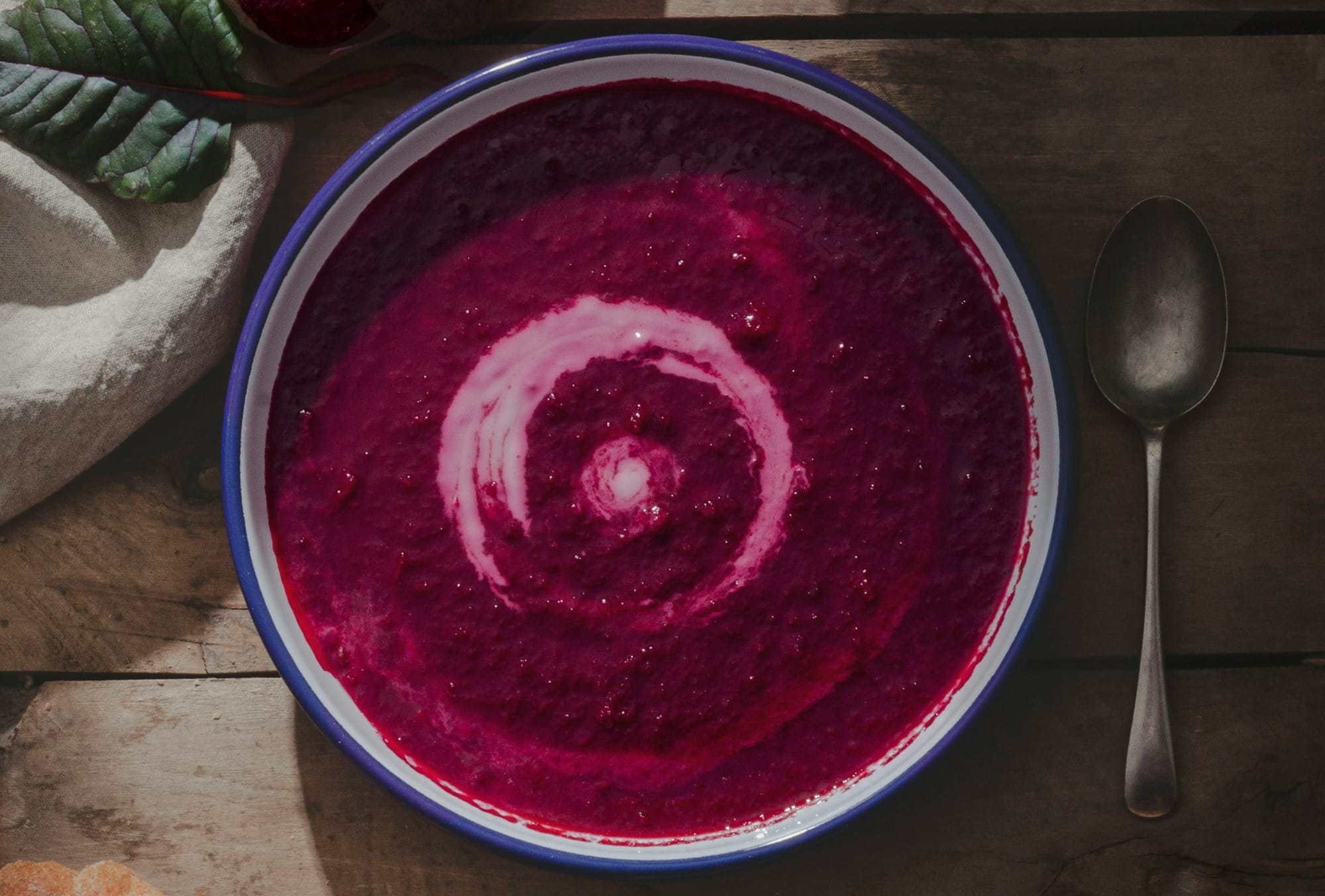
- Any smooth, blended soup — the most practical and flexible Level 4 food category. Tomato, pumpkin, butternut squash, leek and potato, cauliflower cheese — all achieve Level 4 when well blended and sieved. The texture should be thick enough to hold shape on a spoon, not pour like a thin broth. Cream or butter added at the end improves both consistency and caloric density.
❌ Foods That Are Not Level 4 — And Cannot Be Made So
These foods either cannot be made smooth enough or present hidden texture risks even when apparently smooth:
Structural risks:
- Bread, toast, crackers — even soaked bread forms a sticky, doughy bolus that is dangerous for Level 4 patients. Cannot be made Level 4. No exceptions.
- Rice — individual grains cannot be fully eliminated even with thorough blending unless made as congee with a very high water ratio. Even one grain is a Level 4 failure.
- Pasta al dente or undercooked — must be very well cooked before blending.
- Nuts and seeds — cannot be made smooth enough even with high-powered blending.
- Stringy meats — pulled pork, certain cuts of beef, chicken breast cooked dry. The fibres survive even thorough blending.
Fibre and skin risks:
- Whole fruits with skin — all fruit must be peeled before puréeing.
- Vegetables with husks or tough skin — peas must be sieved, corn must be sieved, tomatoes must be sieved.
- Leafy greens without sieving — spinach and kale have fibrous cell walls that survive blending. Must be sieved after blending.
Mixed texture risks — the most commonly missed category:
- Soup with chunks — even a small piece is a Level 4 failure.
- Yogurt with fruit pieces, seeds, or granola.
- Porridge with whole oats, seeds, or dried fruit.
- Jello/jelly — specifically contraindicated for dysphagia. It melts from solid to liquid in the mouth, creating a mixed texture. Never serve jelly to a Level 4 patient.
- Ice cream with mix-ins — plain smooth ice cream is borderline Level 4 (see caution below). Any ice cream with pieces, swirls, or chunks is not appropriate.
Dry and crumbly foods:
- Dry biscuits, shortbread, crumble toppings — cannot be made sufficiently smooth or cohesive.
- Dry cake without sauce — cake crumbles in the mouth and creates unpredictable boluses.
Critical ice cream caution: Plain smooth ice cream melts in the mouth into a thin liquid — which effectively means someone prescribed Level 4 is consuming a thin liquid when eating ice cream. For patients where thin liquids are also restricted, ice cream requires SLP guidance before serving. For patients where the IDDSI liquid prescription is Level 2 or above, ice cream is generally not safe without specific SLP approval.
The Caloric Density Problem — And How to Solve It
Adding full-fat products to meals, snacks, puddings, and drinks is called food fortification — and it's essential on a Level 4 diet.
The problem is straightforward: puréeing food requires adding liquid. Adding liquid dilutes the caloric content. A 200-calorie portion of chicken that required 100ml of stock to achieve Level 4 consistency now contains significantly fewer calories per gram than the original. Served in the same bowl, it looks like a meal — but it may be delivering 30–40% fewer calories than the equivalent regular meal.
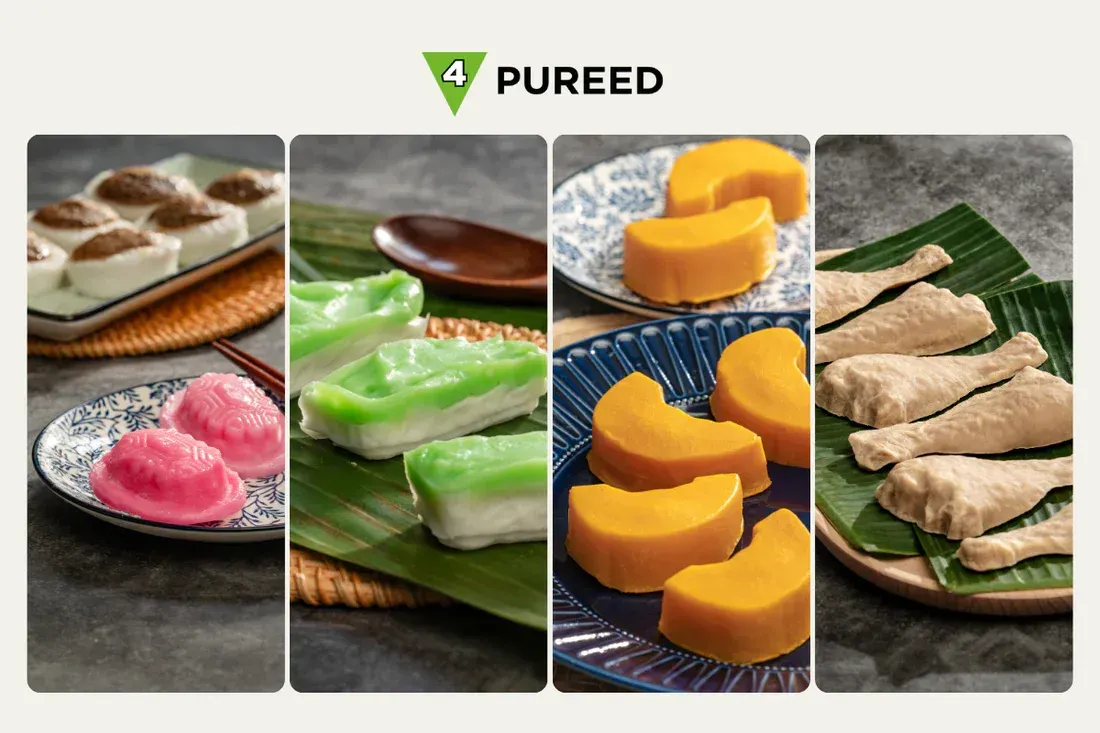
The most effective intervention for improving nutrition and mealtime satisfaction on puréed diets was shaping or moulding puréed foods to resemble regular foods, which improved protein intake by 32–36%. The visual recognition of food as food — not as a beige bowl of paste — directly affects how much of it gets eaten.
Practical fortification strategies — add these to every meal:
For savoury dishes:
- Add butter, double cream, or full-fat crème fraîche to puréed vegetables, mashed potato, and soups
- Use full-fat milk instead of water when blending proteins
- Add full-fat cream cheese or grated cheese to puréed vegetables and sauces — add 1–2 handfuls of grated cheese, cream cheese, cream, butter, or mayonnaise to warm vegetables, potatoes, stews, soups, and sauces
- Use cooking juices and gravies rather than plain water when blending meats — the fat content increases caloric density and improves flavour
- Add olive oil to bean purées and vegetable dishes
For sweet dishes and drinks:
- Add extra sugar, cream, syrup, jam, honey, or chocolate spread into puddings and cereals
- Use full-fat yogurt rather than low-fat
- Use enriched milk — made by adding 4 tablespoons of dried milk powder to a pint of full-fat milk — in porridge, custard, sauces, and hot drinks
- Add smooth nut butter (almond, peanut) to fruit purées — high in protein and calories, and blends smoothly into fruit purées
Protein fortification:
- Unflavoured whey protein powder blends into smooth soups, porridge, and custard without significantly altering flavour or consistency
- Silken tofu blended into smooth soups adds protein without changing the texture
- Full-fat Greek yogurt stirred into fruit purées adds protein and calories
Important caveat: Adding liquid to achieve fortification can thin the consistency below Level 4. Always recheck with the spoon tilt test after adding fortification ingredients — particularly when adding warm liquids or creams to food that has cooled.

Presentation — Why It Matters More Than You Think
Shaping or moulding puréed foods to resemble regular foods using 3D moulds improved protein intake by 32–36% in people on puréed diets. This is not a cosmetic improvement — it is a clinically significant nutritional intervention.
When food looks like food — a chicken breast shape rather than a brown mound, a carrot shape rather than an orange smear — people eat more of it. The visual recognition activates appetite in a way that an unidentifiable purée does not.
Practical presentation strategies:
Separate before blending. Blend each component of a meal separately — protein, carbohydrate, and vegetable each in its own bowl. The plate then has distinct colours and identifiable components rather than one mixed beige. This is one of the most immediately impactful changes a caregiver can make and requires no special equipment.
Use silicone food moulds. Inexpensive moulds shaped like chicken breasts, fish, vegetables, and desserts are available online. Puréed food pressed into a mould, chilled briefly, then turned out onto a plate looks startlingly close to the original dish. The psychological effect on appetite is consistent and significant.
Sauces and garnishes. A drizzle of smooth gravy, a spoonful of smooth fruit coulis, or a small pool of smooth cream sauce on a Level 4 plate adds visual contrast, flavour, and calories simultaneously. Ensure any sauce added is also Level 4 consistent — no thin sauces that separate from the food.
Proper plates and cutlery. A Level 4 meal served on a proper dinner plate, with a proper fork alongside the spoon, at a properly set table looks like a meal. The same food served in a hospital bowl with a plastic spoon does not. The environmental signals matter for appetite as much as the food itself.
7-Day Level 4 Meal Plan
This meal plan is designed for variety and caloric adequacy. Every item listed has been tested against Level 4 criteria. Fortification additions (butter, cream, full-fat dairy) are noted where particularly important.
Important: Always verify each dish with the spoon tilt test before serving. Preparation method affects the final IDDSI level — even familiar dishes need checking each time.
Monday
Breakfast: Smooth oat porridge made with full-fat milk and double cream. Add honey. Check consistency — should hold shape on a spoon, not pour.
Morning snack: Full-fat smooth yogurt — plain or with puréed banana stirred through.
Lunch: Smooth butternut squash soup — blend with double cream and butter. Add fortified milk. Thick enough to hold on a spoon.
Afternoon snack: Smooth hummus — plain Sabra or similar. Served with a small amount of puréed avocado for additional calories.
Dinner: Puréed chicken thigh blended with cream sauce and puréed carrot on the side. Smooth mashed potato with butter and cream. Serve components separately on the plate.
Dessert: Smooth vanilla custard — our classic custard recipe or commercial Thick-It custard.
Tuesday
Breakfast: Smooth scrambled eggs — cooked with cream, blended smooth. Add butter.
Morning snack: Smooth fromage frais with puréed mango stirred through.
Lunch: Puréed red lentil dal — naturally smooth, high in protein. Add full-fat coconut cream for calories.
Afternoon snack: Full-fat smooth yogurt.
Dinner: Puréed salmon with cream sauce. Smooth sweet potato purée with butter. Puréed peas on the side — sieved for complete smoothness.
Dessert: Puréed banana with whipped cream.
Wednesday
Breakfast: Smooth oat porridge with full-fat milk. Stir through puréed stewed apple with honey.
Morning snack: Smooth cream cheese on its own or mixed with puréed avocado.
Lunch: Smooth leek and potato soup with butter and cream.
Afternoon snack: Full-fat smooth yogurt.
Dinner: Puréed beef casserole — slow-cooked beef blended with cooking juices until smooth. Smooth polenta with butter and parmesan. Puréed spinach — sieved.
Dessert: Smooth chocolate mousse — made with dark chocolate, cream, and egg yolk. Blended smooth and chilled.
Thursday
Breakfast: Smooth rice congee with puréed chicken — traditional Asian breakfast adapted for Level 4. Naturally smooth and comforting.
Morning snack: Smooth yogurt.
Lunch: Smooth tomato soup — blend with cream. Ensure no tomato skin or seeds remain — pass through a fine sieve.
Afternoon snack: Smooth avocado purée.
Dinner: Puréed white fish in cheese sauce. Smooth mashed potato. Puréed butternut squash.
Dessert: Smooth panna cotta — naturally Level 4 when made correctly. Add puréed raspberry coulis — sieved to remove seeds.
Friday
Breakfast: Smooth scrambled eggs with cream cheese stirred through for extra calories.
Morning snack: Full-fat smooth yogurt with puréed peach.
Lunch: Smooth cauliflower cheese soup — blend the cauliflower with the cheese sauce until completely smooth.
Afternoon snack: Smooth hummus.
Dinner: Puréed lamb with mint and gravy — slow-cooked lamb blended with cooking juices and a small amount of smooth mint sauce. Smooth mashed potato. Puréed peas.
Dessert: Our Cinnamon Apple Custard — built specifically for Level 4 with the consistency check included.
Saturday
Breakfast: Smooth oat porridge with full-fat milk and honey.
Morning snack: Smooth yogurt.
Lunch: Smooth pumpkin soup with coconut cream and ginger — blend thoroughly, sieve.
Afternoon snack: Smooth avocado with cream cheese.
Dinner: Puréed chicken curry — blend a mild curry with coconut cream until completely smooth. Smooth rice congee is the carbohydrate component.
Dessert: Smooth mango purée with vanilla custard.
Sunday
Breakfast: Smooth scrambled eggs.
Morning snack: Full-fat smooth yogurt with puréed banana.
Lunch: Smooth broccoli and cheese soup — blend with cream and full-fat cheese.
Afternoon snack: Smooth hummus.
Dinner: Puréed roast dinner — blend the protein (chicken or beef) with smooth gravy. Smooth mashed potato. Puréed carrot with butter. Serve components separately on the plate with a drizzle of smooth gravy over the protein.
Dessert: Smooth vanilla ice cream — with SLP approval regarding thin liquid protocol. Alternatively, smooth custard.
Ready-Made Level 4 Options — For When Cooking Isn't Possible
On difficult days, commercially prepared Level 4 products provide a safe, consistent backup. Our ready-made puréed food comparison covers the main options in detail. The essentials to keep in the pantry:
Thick-It Puréed Protein Variety Pack — beef stew, chicken, lasagna. Level 4 certified. Available on Amazon.
Thick & Easy Individual Trays — complete single-serve meals. Microwave in 90 seconds. Available on Amazon.
Thick-It Puréed Desserts — caramel apple pie and French toast. Level 4 certified. Available on Amazon
Keep a case of each as a permanent pantry backup. They don't expire quickly, require no refrigeration, and mean a safe Level 4 meal is always available regardless of what else is happening.
Equipment That Makes Level 4 Cooking Easier
The right equipment significantly reduces the time and effort of Level 4 preparation. Our texture modification tools guide covers everything in detail. The essentials:
High-powered blender — the single most important purchase. A Vitamix or Ninja produces consistently smoother results than a standard blender. The difference between a Level 4 result and a Level 5 result is often blender power.
Fine-mesh sieve — every Level 4 purée should be passed through a fine-mesh sieve before serving. Non-negotiable for proteins, fruits with skins, and legumes.
Potato ricer or food mill — for mashed potatoes and root vegetables. Produces a significantly smoother result than a standard masher.
Silicone food moulds — for presentation. Inexpensive and significantly improves the visual appeal of meals.
Kitchen thermometer — consistency changes with temperature. Always check at serving temperature.
For a full explanation of how food and liquid levels work separately and together, see our IDDSI Food and Liquid Levels Guide.
Frequently Asked Questions
What is the IDDSI Level 4 diet?
IDDSI Level 4 (Puréed) describes foods that are smooth and lump-free, not firm or sticky, require no chewing or bolus formation, fall off a spoon as an intact spoonful, and hold shape on a plate. It is prescribed for people with moderate to severe dysphagia who cannot safely manage food with any texture or lumps.
Can someone on IDDSI Level 4 eat mashed potatoes?
Yes — mashed potato is allowed, but it must be puréed until completely smooth and lump-free, with the skin removed. Add butter, cream, or milk to prevent a sticky or gummy texture. Use a potato ricer rather than a standard masher, and check with the spoon tilt test before serving.
Is bread allowed on IDDSI Level 4?
No — plain bread, toast, and crackers are not suitable as they are dry and crumbly. Even soaked bread forms a sticky, unpredictable bolus that is unsafe for Level 4. No preparation method makes bread suitable for Level 4.
Can someone on Level 4 eat soup?
Yes — smooth, blended soups are one of the most practical and versatile Level 4 foods. The soup must be thick enough to hold its shape on a spoon and not pour like a thin broth. Any soup with pieces, chunks, or visible ingredients is not Level 4 — blend and sieve thoroughly before serving.
How do I know if I've puréed food to the right consistency?
The spoon tilt test: load a teaspoon with the puréed food and tilt it sideways. It should slide off in one slow, cohesive movement. If it sticks — too thick, add a little warm liquid and retest. If it runs off quickly like liquid — below Level 4, return to heat or reduce liquid and retest.
What if the person keeps losing weight on a Level 4 diet?
This is a common and serious problem. IDDSI Level 4 consumption is independently associated with malnutrition — the puréeing process dilutes caloric density. Increase fortification in every meal (butter, cream, full-fat dairy, whey protein), consider oral nutritional supplements thickened to the appropriate level, and request a referral to a dietitian. Consistent weight loss without explanation warrants urgent review.
Who decides the IDDSI level?
The IDDSI level is prescribed by a speech-language pathologist based on a formal swallowing assessment. Do not change levels based on observation alone — even on days when the person seems to be managing well. Any change in the prescribed level must follow an SLP reassessment.
References
IDDSI Framework. (2019). Complete framework and detailed definitions V2.0. https://www.iddsi.org/framework
Tsuji, T., et al. (2024). Association between malnutrition and food texture levels in integrated facilities for medical and long-term care. Clinical Nutrition ESPEN. https://www.ncbi.nlm.nih.gov/pmc/articles/PMC11228454/
Vucea, V., et al. (2022). Effects of hydrolysed meat on dietary intake and nutritional status in aged care residents requiring puréed diets. Clinical Nutrition. https://www.ncbi.nlm.nih.gov/pmc/articles/PMC9700874/
Cichero, J. A. Y., et al. (2017). Development of international terminology and definitions for texture-modified foods and thickened fluids used in dysphagia management. Dysphagia, 32(2), 293–314. https://doi.org/10.1007/s00455-016-9758-y
Milton Keynes University Hospital NHS Foundation Trust. (2021). IDDSI Level 4 Puréed Diet patient leaflet. https://www.mkuh.nhs.uk/patient-information-leaflet/iddsi-level-4-puree-diet
Gateshead Health NHS Foundation Trust. (2025). Eating well on a Puree (IDDSI Level 4) diet. https://www.gatesheadhealth.nhs.uk/resources/eating-well-on-a-puree-iddsi-level-4-diet/
American Speech-Language-Hearing Association. (n.d.). Adult dysphagia (Practice Portal). https://www.asha.org/practice-portal/clinical-topics/adult-dysphagia/