IDDSI Diet Levels: Food vs Liquid — What Each Level Means and What to Eat
IDDSI food and liquid diet levels. This guide explains what each level means for drinks and meals, and how to manage two prescriptions at once.

The first time I looked at my mother's discharge letter, it said two things: Level 3 liquids and Level 5 food. I stared at both numbers for a long time before I understood they were completely separate instructions — one telling me how to prepare her drinks, the other telling me how to prepare her meals.
Nobody had explained that the IDDSI framework covers two entirely different things — food textures and liquid thicknesses — and that a person can be prescribed a different number for each. If you're holding a letter with two IDDSI numbers and wondering what they both mean, this is the article that explains it.
The Framework Covers Two Different Things
IDDSI has 8 levels — numbered 0 through 7. But those 8 levels don't all describe the same thing.
Liquids are measured from Levels 0–4, and foods are measured from Levels 3–7. They use the same numbering system, but they're describing different properties. The numbers overlap at Levels 3 and 4 — which is where almost all the confusion happens.
Here is the clearest way to understand it:
| IDDSI Level | Name | Type | What It Describes |
|---|---|---|---|
| 0 | Thin | 🥤 Liquid only | Plain water, juice, coffee — unthickened |
| 1 | Slightly Thick | 🥤 Liquid only | Thickened drink — flows slightly slower than water |
| 2 | Mildly Thick | 🥤 Liquid only | Thickened drink — pours in a steady ribbon |
| 3 | Moderately Thick / Liquidised | 🥤🍽️ Both | Thickened drink AND liquidised food — same level number, different substance |
| 4 | Extremely Thick / Puréed | 🥤🍽️ Both | Extremely thick drink AND puréed food — same level number, different substance |
| 5 | Minced and Moist | 🍽️ Food only | Soft food minced to 4mm pieces in sauce |
| 6 | Soft and Bite-Sized | 🍽️ Food only | Tender food cut to 1.5cm pieces |
| 7 | Regular / Easy to Chew | 🍽️ Food only | Normal diet or soft-only normal diet |
The Most Important Thing to Understand about IDDSI Levels
Level 4 (Puréed Foods and Extremely Thick Drinks) and Level 3 (Liquidised Foods and Moderately Thick Drinks) are presented on the IDDSI framework as connected because their flow properties and behaviour are similar. It does not mean they need to be prescribed together. Clinicians need to assess the patient's ability to manage foods and drinks independently.
In plain terms: the same number on a food prescription and a liquid prescription means two different things. A person prescribed Level 3 for liquids needs their drinks thickened to moderately thick. A person prescribed Level 3 for food needs food blended to a liquidised, smooth, pourable consistency. The number is the same. The substance is completely different.
And — critically — liquid levels and food texture levels can be recommended separately. For example, a person may be on Level 5 Minced and Moist foods but Level 2 Mildly Thick liquids. You may also have only one of the two modified.
This means there is no automatic link between the food level and the liquid level. Your loved one's SLP assessed both independently and prescribed what is appropriate for each.
The Liquid Levels (0–4): What They Mean for Drinks
Liquid levels describe how thick a drink needs to be. The thicker the liquid, the more slowly it flows — giving the swallowing muscles more time to respond safely.
Level 0 — Thin: No modification needed. Plain water, juice, tea, coffee as they come. This is normal. Most people with dysphagia find thin liquids the hardest to manage — they flow too fast for a compromised swallow reflex to respond to.
Level 1 — Slightly Thick: A barely noticeable thickening — flows slightly slower than water. Still pours freely. Can be drunk through a standard straw.
Level 2 — Mildly Thick: Noticeably thicker — pours in a slow, steady ribbon from a spoon. Cannot be drunk through a standard straw easily. Requires a small amount of commercial thickener.
Level 3 — Moderately Thick: The thickest drinkable consistency. Can still be drunk from a cup but flows very slowly. Drips through a fork in slow, separate dollops. Requires commercial thickener — does not occur naturally in most drinks.
Level 4 — Extremely Thick: Does not flow at all. Cannot be drunk from a cup or a straw. Taken with a spoon. At this level, the drink behaves like food — it holds shape on a spoon.
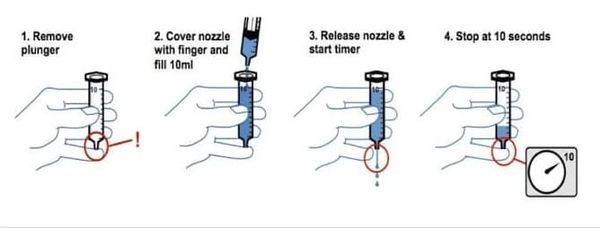
Testing liquid levels: The validated method is the syringe flow test using a 10ml BD Slip Tip syringe. Our IDDSI syringe flow test guide covers the full process step by step with photos.
Choosing the right thickener: Not all thickeners behave the same in all drinks. Our gum-based thickener guide explains the difference between starch and gum-based options, and our drink-specific thickener guide covers which thickener works best for which drink.
Choosing the right cup: At Levels 1–3, the cup matters as much as the thickener. A flow-control cup limits the volume of liquid per sip regardless of how fast the person drinks. Our dysphagia cups guide covers the options by IDDSI level.
The Food Diet Levels (3–7): What They Mean for Meals
Food levels describe the texture of solid food. The lower the number, the smoother and softer the food needs to be.
Level 3 — Liquidised Food
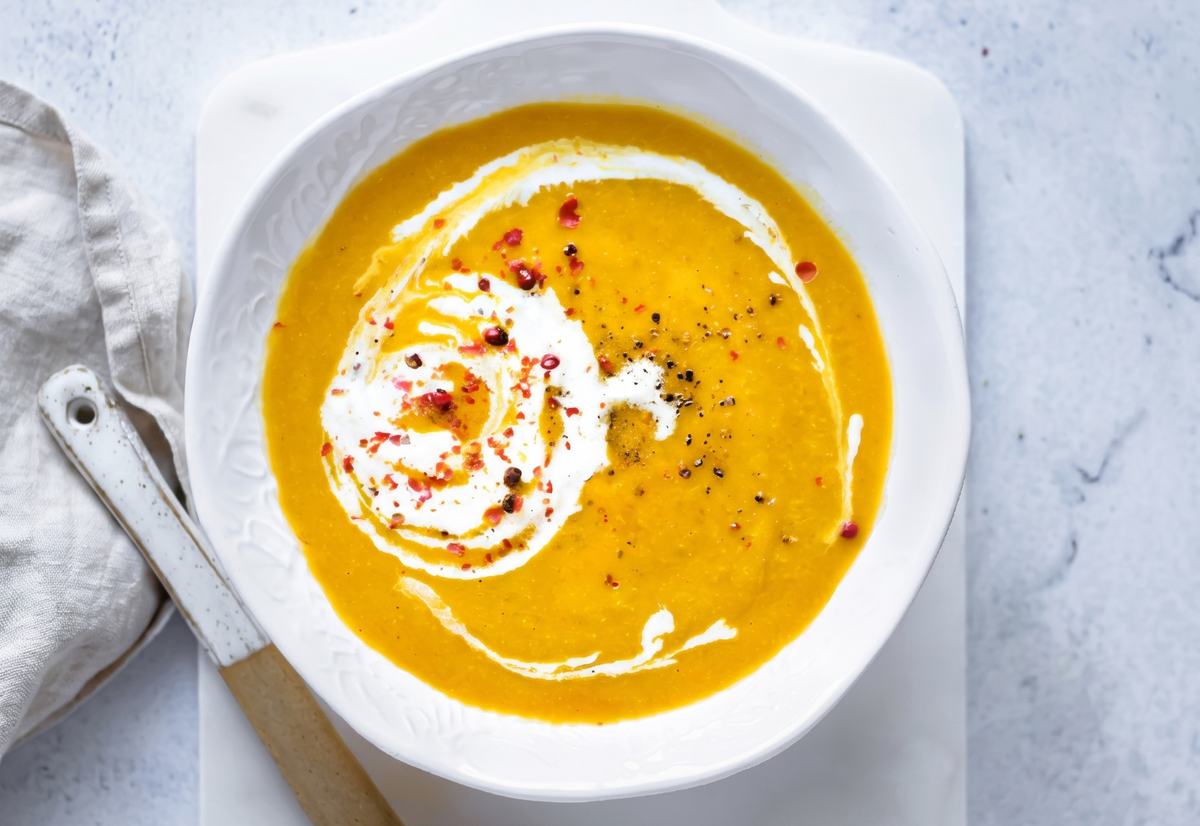
Liquidised food is completely smooth — no lumps, no fibres, no pieces of any kind. It flows slowly from a spoon like a thick liquid, and can be eaten with a spoon or drunk from a cup. Think smooth blended soups, porridge, smooth yogurt drinks.
Level 3 liquidised foods may be used if you have trouble moving your tongue. The thicker consistency gives more time for the tongue to hold and move the liquidised food. It is easiest to eat liquidised food with a spoon.
The key practical point: liquidised food and moderately thick liquid look almost identical in a bowl or cup. The difference is what they started as — one started as solid food that was blended, the other started as a drink that was thickened. Both must pass the same IDDSI test at Level 3.
What to eat: Smooth blended soups, smooth Okayu or Congee porridge, blended meals (chicken in gravy blended smooth), smooth yogurt, smooth custard, smooth fruit purée. Our IDDSI Level 3 Diet Guide has the complete food list, what to avoid, and a 7-day meal plan.
Level 4 — Puréed Food
Puréed food is completely smooth but thicker than Level 3 — it holds its shape on a spoon rather than flowing. It does not pour. It slides off a tilted spoon in one cohesive movement. Think smooth hummus, thick smooth mashed potato, smooth custard.
No chewing required at all — the tongue moves the food to the back of the throat using pressure alone.
What to eat: Smooth puréed chicken or fish in sauce, smooth mashed potato, puréed vegetables, smooth oat porridge, smooth yogurt, custard, polenta. Our IDDSI Level 4 Diet Guide has the complete food list, fortification strategies, and a 7-day meal plan.
Level 5 — Minced and Moist Food
Minced and moist food has small visible pieces — no larger than 4mm, approximately the gap between two fork prongs. The pieces must be soft enough to mash under gentle tongue pressure, and moist enough to hold together rather than separate or crumble.
Some minimal chewing is possible and used at this level. Think finely minced chicken in thick sauce, soft fish mashed with mayonnaise, well-cooked lentils, soft scrambled egg.
What to eat: Minced meat in thick sauce, soft fish, well-cooked egg, soft pasta cut small, mashed potato, finely minced soft vegetables in sauce. Our IDDSI Level 5 Diet Guide has the complete food list, the 4mm rule explained in practice, and a 7-day meal plan.
Level 6 — Soft and Bite-Sized Food
Soft and bite-sized food has recognisable pieces — tender, moist, and no larger than 1.5cm (approximately thumbnail size). The food must break apart under gentle fork pressure. Moderate chewing is required but biting off a piece is not — food is cut to size before serving.
Think tender slow-cooked chicken, soft fish, well-cooked pasta, soft bread without hard crusts, ripe banana, canned soft fruit.
What to eat: Slow-cooked meats, soft fish, well-cooked pasta and rice, tender vegetables, soft bread, ripe fruit. Our IDDSI Level 6 Diet Guide has the complete food list, the fork pressure test explained, and a 7-day family-friendly meal plan.
Level 7 — Regular and Easy to Chew Food
Level 7 has two sub-levels:
Level 7 Regular (RG7): A completely unrestricted normal diet. All foods of all textures. No modification needed.
Level 7 Easy to Chew (EC7): A normal diet restricted to soft and tender textures only — no hard, crunchy, tough, or chewy foods. No size restriction (unlike Level 6). The fork pressure test confirms whether a food is soft enough. This level is often prescribed for older adults with weakened chewing muscles who don't have a formal dysphagia diagnosis.
What to eat at EC7: Tender slow-cooked meats, most fish, soft bread, well-cooked vegetables, ripe fruit, soft cheese, soft desserts. Our IDDSI Level 7 Diet Guide covers both sub-levels in detail including the fork pressure test and the transition from Level 6.
When You Have Two Different Levels — The Common Combinations
This is the section most caregiver guides skip. A person with dysphagia is almost always managing two prescriptions simultaneously — one for food, one for liquid. Here are the most common combinations and what they mean in practice:
| Food Level | Liquid Level | What This Means at the Table |
|---|---|---|
| Level 5 Minced and Moist | Level 3 Moderately Thick | Finely minced soft food in sauce. All drinks thickened to moderately thick — drips slowly through a fork. |
| Level 5 Minced and Moist | Level 2 Mildly Thick | Finely minced soft food in sauce. Drinks mildly thickened — pours in a ribbon. |
| Level 4 Puréed | Level 3 Moderately Thick | Completely smooth food. Drinks thickened to moderately thick. Both test similarly — but one was food, one was a drink. |
| Level 4 Puréed | Level 4 Extremely Thick | Completely smooth food. Drinks also extremely thick — taken by spoon rather than drunk. |
| Level 6 Soft and Bite-Sized | Level 1 Slightly Thick | Tender pieces to 1.5cm. Drinks only slightly thickened — barely different from normal. |
| Level 6 Soft and Bite-Sized | Level 0 Thin | Tender pieces to 1.5cm. Normal unthickened drinks — no thickener needed. |
| Level 7 Easy to Chew | Level 2 Mildly Thick | Near-normal food — just avoid hard and tough textures. Drinks mildly thickened. |
The combination is determined by the SLP based on two separate assessments — one for how the person manages food, one for how they manage liquid. They don't automatically match.
Porridge — The Food That Covers Multiple Levels
One practical note worth making: porridge is one of the most versatile dysphagia-friendly foods because it can be prepared to reach Level 2, 3, or 4 depending on the recipe and water ratio.
Our dysphagia porridge guide covers six porridge types from around the world — each organised by IDDSI level, with individual recipes for each one. It's one of the most practical starting points for Level 3 and Level 4 cooking.
Free Printable IDDSI Handouts
The IDDSI team produces free printable handouts for every level — one page per level with food examples, testing methods, and what to avoid. These are the handouts your SLP may have given you at discharge, or should have.
Download the levels you need from our IDDSI Printable Downloads page — including individual level handouts for both food and liquid, the full framework poster, and the all-levels combined PDF.
Frequently Asked Questions
What is the difference between IDDSI food levels and liquid levels?
Liquid levels (0–4) describe how thick a drink needs to be. Food texture levels (3–7) describe how soft and modified solid food needs to be. They use the same numbering system but describe completely different things. A person can — and usually does — have a different number prescribed for food and for liquid.
Can someone be on different IDDSI levels for food and drink?
Yes — this is the norm, not the exception. Clinicians assess a patient's ability to manage foods and drinks independently. For example, a patient may require liquids thickened to Level 3 due to poor oral control but can manage Minced and Moist foods at Level 5. The two prescriptions are always made separately.
Do Level 3 food and Level 3 liquid need to be served together?
No. IDDSI Level 3 (Liquidised Foods and Moderately Thick Drinks) are presented on the framework as connected because of their similar flow properties and behaviour. It does not mean they need to be prescribed together. The level number is the same because the physical properties are similar — not because one always comes with the other.
What level is puréed food?
Puréed food is Level 4. It is completely smooth, holds shape on a spoon, and does not flow or pour. It is also the same number as Extremely Thick liquid — but puréed food and extremely thick drink are different substances that happen to behave similarly and share a level number.
What level is thickened water?
Thickened water is classified by how thick it is — Level 1 (slightly thick), Level 2 (mildly thick), Level 3 (moderately thick), or Level 4 (extremely thick). The level is prescribed by the SLP and verified using the syringe flow test. Our syringe flow test guide covers how to check the level at home.
What is IDDSI Level 7 Easy to Chew?
Level 7 Easy to Chew (EC7) is a normal diet restricted to soft and tender textures only — no size restriction, but all food must pass the fork pressure test. It is different from Level 7 Regular (RG7) which has no restrictions at all. EC7 is often prescribed for older adults with weakened chewing muscles who don't have a formal dysphagia diagnosis. Our Level 7 diet guide covers both sub-levels in detail.
Who decides the IDDSI level?
The IDDSI food texture level and liquid consistency level are both prescribed by a speech-language pathologist following a formal swallowing assessment. They cannot be self-diagnosed or estimated. If you do not know your loved one's prescribed levels, the discharge letter or the treating SLP are the correct sources — not a general internet guide including this one.
What if my loved one refuses thickened drinks?
Thickened liquid refusal is one of the most common challenges in dysphagia management. Our thickened drink refusal guide covers why it happens, what actually works, and when the Frazier Free Water Protocol might be an option to discuss with the SLP.
References
International Dysphagia Diet Standardisation Initiative. (2024). Do I need to recommend both food and drinks at Level 3 or Level 4? IDDSI FAQ. https://www.iddsi.org/faqs/q-do-i-need-to-recommend-both-food-and-drinks-need-to-be-a-level-3-or-level-4-when-my-patient-is-requiring-either-food-or-drinks-at-this-level
International Dysphagia Diet Standardisation Initiative. (2019, updated 2024). Complete framework and detailed definitions V2.2. https://www.iddsi.org/framework
Cichero, J. A. Y., et al. (2017). Development of international terminology and definitions for texture-modified foods and thickened fluids used in dysphagia management. Dysphagia, 32(2), 293–314. https://doi.org/10.1007/s00455-016-9758-y
American Speech-Language-Hearing Association. (n.d.). Adult dysphagia (Practice Portal). https://www.asha.org/practice-portal/clinical-topics/adult-dysphagia/